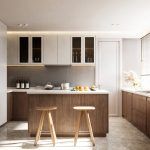
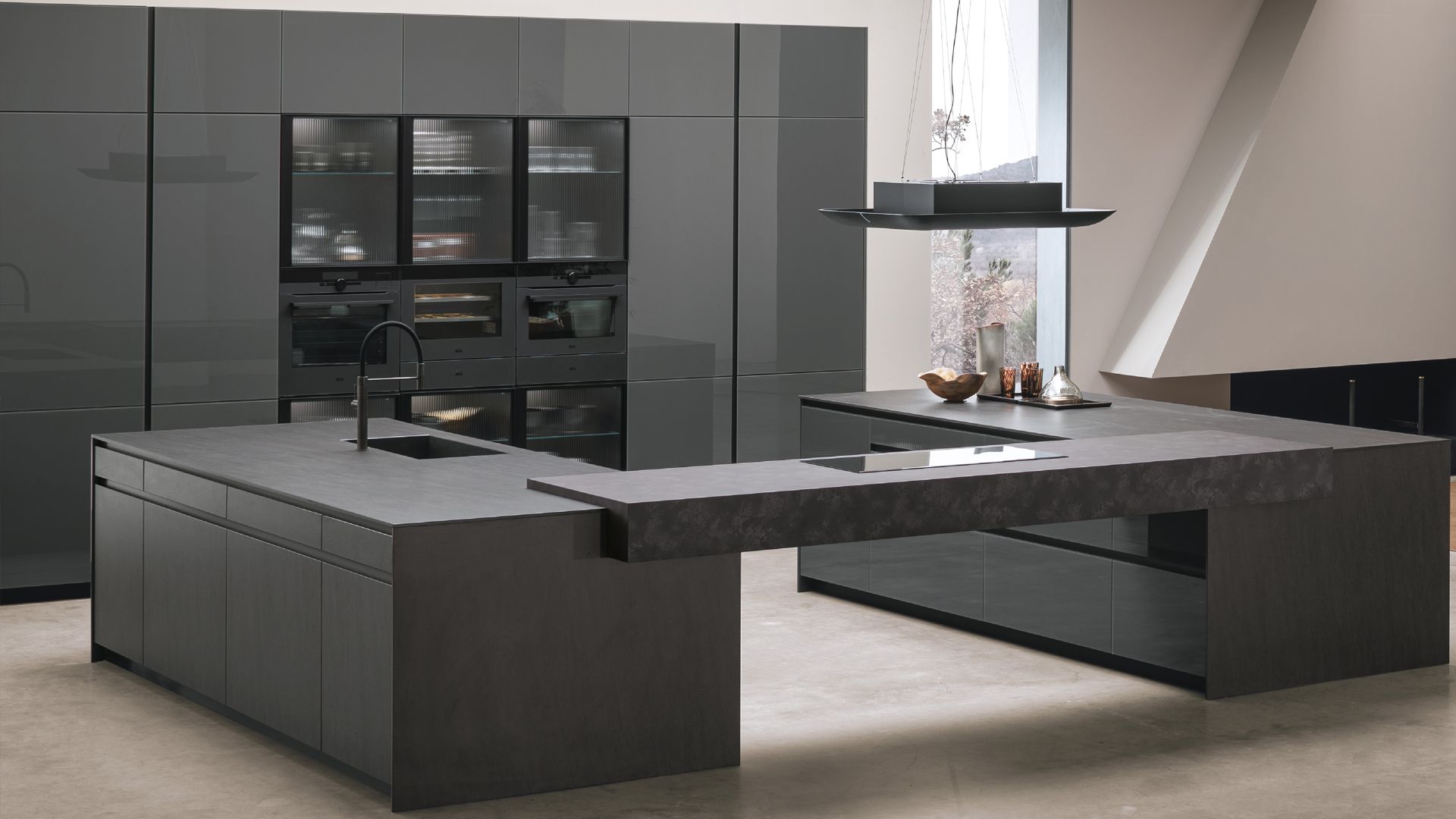
Yes – kitchen cabinets with glass doors absolutely work in a modern kitchen, provided they are chosen and placed with intent rather than sprinkled in for decoration. The old assumption was that glass fronts belonged only to traditional china hutches and grandma’s dining room. Today, glass-front cabinetry is one of the most requested ways to add depth, light, and personality to a clean contemporary space. The trick is knowing which glass to use, where to use it, and how to keep the look disciplined. This guide walks through exactly that, drawing on what we see every day in our Orange County showrooms.
At Prestige Cabinet, we design modern kitchens across Santa Ana and Laguna Niguel, and glass doors show up in more of them each year – not as a throwback, but as a deliberate design tool. Below, we cover the case for glazed uppers, the glass types that read as modern, the safety details that separate quality work from shortcuts, and the honest trade-offs you should weigh before committing.
The Short Answer: Glass Fronts Fit Modern Kitchens When You Design Them With Purpose
If you only remember one thing, remember this: kitchen cabinets with glass doors succeed in contemporary spaces because they solve a specific problem. A wall of solid, floor-to-ceiling cabinetry can feel heavy and monolithic. Glass breaks up that mass, reflects light, and gives the eye somewhere to rest. Used as an accent – a single run of uppers, a beverage zone, a display column – glazed cabinet doors introduce breathing room without sacrificing storage.
Where glass fronts go wrong is when they are treated as a default rather than a decision. Glaze every door in the room and you have created a display case that demands constant tidying. Choose the right glass, the right placement, and the right interior, and you get a kitchen that feels curated, luminous, and unmistakably modern.
What “Modern” Actually Means in Today’s Kitchens
Before deciding whether glass belongs, it helps to define the aesthetic we are designing for. “Modern” is not a single look – it spans minimalist, contemporary, transitional, and warm-modern styles. What unites them is a preference for clean lines, uninterrupted surfaces, and a sense of calm.
According to the National Kitchen & Bath Association’s 2026 Kitchen Trends Report – a survey of 634 industry professionals across North America – kitchens are taking on a larger, more central role in the home, with 76% of respondents reporting that kitchens are growing in importance and footprint. As kitchens open up to living and dining areas, the cabinetry is increasingly on display from every angle. That visibility is precisely why thoughtfully placed glass has become a modern staple rather than a period detail.
The Shift Away From the All-White, Closed Box
For years, the default modern kitchen was a sea of flat white doors. That look is softening. Designers now layer warmer tones, natural wood, and varied textures to avoid the sterile, showroom feel. Glass is part of that layering. A glass-fronted section interrupts an expanse of solid slab doors and signals that a kitchen was designed, not assembled from a catalog.
Light, Sightlines, and Open-Plan Living
Open-plan homes reward materials that move light around. Glass cabinet doors do exactly that, bouncing daylight deeper into the room and keeping sightlines from feeling blocked. In a galley or a compact kitchen, that visual openness can make the whole space read larger than its square footage suggests.

Why Glass-Front Cabinets Belong in Contemporary Design
There are concrete, functional reasons glass earns its place in a modern layout. It is not only about looks.
Visual Lightness and the Illusion of Space
Solid upper cabinets create a continuous horizontal band that can press down on a room. Swap a portion for glass and that band lifts. The reflective, semi-transparent surface reduces perceived bulk, which is invaluable in smaller kitchens or in homes where the kitchen flows into a living area. This is one of the most reliable reasons kitchen cabinets with glass doors work so well in modern homes: they add storage while subtracting visual weight.
A Curated Middle Ground Between Open Shelving and Solid Doors
Open shelving had a long moment, but many homeowners discovered the reality – everything gets dusty, greasy, and impossible to keep styled. Solid doors hide everything but give you nothing to look at. Glass fronts sit precisely in between. You get a controlled, framed view of what is inside while keeping items protected from kitchen grease and airborne dust. For anyone who loves the openness of shelves but not the upkeep, glazed doors are the sensible compromise.
Built-In Display and Interior Cabinet Lighting
A glass cabinet becomes a feature when it is lit from within. The NKBA report found that interior cabinet lighting was cited by 72% of professionals and under-cabinet lighting by 82%, underscoring how central integrated illumination has become to modern kitchen design. Backlit or top-lit glass turns a run of uppers into architectural display – perfect for glassware, ceramics, or a curated set of everyday objects. The effect is warm, gallery-like, and impossible to achieve with solid doors.
The lighting details are worth getting right. Slim LED strips mounted at the top of the interior wash light downward, while puck lights create pooled highlights on individual shelves. Glass shelves inside the cabinet – rather than solid wood – let that light travel from top to bottom so the whole column glows evenly instead of illuminating only the top row. Warm-white LEDs (in the 2700K–3000K range) keep the mood inviting rather than clinical. When these elements come together, a single run of glass uppers can do more for a kitchen’s atmosphere than any backsplash.
Personalization Without Clutter
Modern kitchens increasingly reflect the people who use them. A single column of glass-front cabinetry lets you show a little personality – a stack of handmade bowls, a run of matched glasses – without turning the whole room into a display. It is personality on a leash, which is exactly what a disciplined contemporary space wants.
Choosing the Right Glass for Glass Cabinet Doors
Not all glass reads as modern, and this is where most projects succeed or fail. The style of glass matters more than most homeowners expect. Here is how the main options behave in a contemporary kitchen.
Clear Glass
Clear glass is the most transparent and the most demanding. It shows everything, so it works only when the interior is genuinely display-worthy and consistently organized. In a modern kitchen, reserve clear glass for a dedicated display cabinet or an illuminated column where the contents are the point. Paired with interior lighting and tidy, matched contents, clear kitchen cabinets with glass doors look intentional and elegant.
Reeded, Fluted, and Ribbed Glass
If there is one glass that defines the current modern moment, it is reeded (also called fluted or ribbed) glass. The vertical texture diffuses light and softly obscures the contents, so you get the glow and depth of glass without needing a perfectly staged interior. It adds tactile, architectural interest and pairs beautifully with both slab and framed doors – the same look behind framed glass-door styles like our Meg contemporary kitchen, whose doors use a fluted, three-dimensional reeded effect. For many of our clients, reeded glass is the easiest way to get glass-front cabinets that feel current and forgiving at the same time.
Frosted and Satin (Acid-Etched) Glass
Frosted or acid-etched glass takes obscuring a step further. It reads as a soft, uniform panel of light – modern, minimal, and quietly luxurious. Because it hides contents almost entirely, frosted glass is ideal where you want the lightness of glass but not the responsibility of a curated shelf. It suits handleless and minimalist kitchens especially well.
Smoked, Tinted, and Seeded Glass
Smoked and tinted glass introduces drama and depth, working well for beverage areas, upper accents, and darker color schemes. Seeded glass – with its subtle antique bubbles – leans a touch warmer and pairs nicely with natural wood and earthy tones now trending in contemporary design. Both give you glass that is more about mood than display. A smoked-glass bar cabinet, for instance, reads as sophisticated even when the contents behind it are ordinary, because the tint softens and unifies whatever sits inside. That forgiving quality makes tinted options a favorite for anyone who loves the look of glass but does not want to police a perfectly arranged shelf.
A quick way to match glass to intent:
- Show it off: clear glass with interior lighting and organized contents.
- Hint at it: reeded or fluted glass for texture and a forgiving interior.
- Hide it: frosted or acid-etched glass for a clean, uniform glow.
- Set a mood: smoked, tinted, or seeded glass for depth and character.
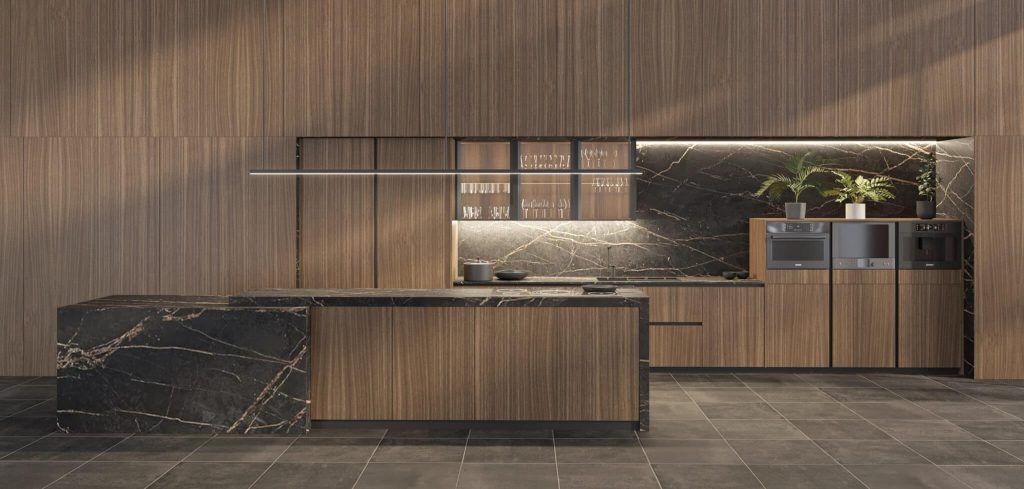
Safety First: What “Tempered” and “Safety Glazing” Really Mean
This is the detail that separates quality cabinetry from a shortcut, and it is where experience genuinely matters. Glass in a busy kitchen should be safety glass – typically tempered – so that if a panel ever breaks, it fractures into small, blunt granules rather than long, dangerous shards.
The benchmark here is federal. The U.S. Consumer Product Safety Commission’s Safety Standard for Architectural Glazing Materials (16 CFR Part 1201) defines how safety glazing is tested and rated, alongside the voluntary ANSI Z97.1 standard. While cabinet doors are not architectural doors and windows in the strict regulatory sense, reputable cabinetmakers apply the same logic: specify glass that meets recognized safety-glazing performance so a household accident does not become an injury. When you are evaluating kitchen cabinets with glass doors, ask directly whether the glass is tempered and how the panels are retained in the frame.
Two more construction details worth confirming:
- Panel retention: Glass should be secured in the door with proper stops or channels so it cannot rattle loose over years of use.
- Edge finishing: Exposed edges should be polished or seamed, not left raw.
These are unglamorous questions, but they are exactly the kind a homeowner should ask – and exactly the kind a serious cabinetmaker will answer without hesitation.
How Glass Doors Interact With Modern Cabinet Styles
Glass rarely lives alone; it lives inside a door style. How it reads depends heavily on the surrounding cabinetry.
Handleless and Frameless Layouts
The cleanest modern kitchens often use handleless, frameless construction – no visible hardware, no face frame, just uninterrupted planes. Glass integrates beautifully here, especially reeded or frosted panels that keep the surface calm. Because these details are the specialty of our handleless and European frameless cabinetry, we cover the mechanics of those systems in depth on their dedicated pages; the takeaway for glass is that a frameless surround lets the panel itself do the talking.
Two-Tone and Mixed-Material Kitchens
Two-tone kitchens – where uppers and lowers, or an island, use contrasting finishes – give glass a natural home. A run of glass-front uppers in a lighter tone above solid, darker lowers adds exactly the kind of layered contrast modern kitchens are moving toward – a balance we break down in our guide to two-tone kitchen cabinets. Glass becomes one more material in the mix rather than the whole story. In these layered schemes, kitchen cabinets with glass doors read as an intentional material choice rather than a nostalgic one – they carry the same modern DNA as the finishes around them, tying the palette together instead of interrupting it.
Slab Versus Framed Doors for Glass
Glass can sit in a minimalist slab door or a framed door, and the choice shifts the mood. A slab surround feels purely contemporary; a slim framed door adds a transitional, tailored edge. Because the broader slab-versus-shaker conversation is handled on our flat-panel and European Shaker pages, here it is enough to know that both can host glass convincingly – the frame simply sets the tone.
The Honest Drawbacks (and How to Design Around Them)
Trust is built by naming the downsides, not hiding them. Glass fronts are not the right answer for every cabinet, and pretending otherwise does no one any favors.
The Organization Commitment
Clear glass shows everything, including the mismatched mugs and the box of cereal. If you know you will not maintain a tidy interior, do not choose clear glass for a prominent run. Instead, reach for reeded or frosted glass, which forgives a less-than-perfect shelf, or confine clear glass to a single, easy-to-maintain display cabinet.
Cleaning, Fingerprints, and Everyday Maintenance
Glass shows smudges. In high-traffic zones near the range or the sink, fingerprints and cooking residue land more often. This is a genuine maintenance consideration, though textured glass like reeded or frosted hides marks far better than clear. Position clear glass away from the greasiest work zones and the upkeep becomes trivial.
Where Glass Fronts Earn Their Place
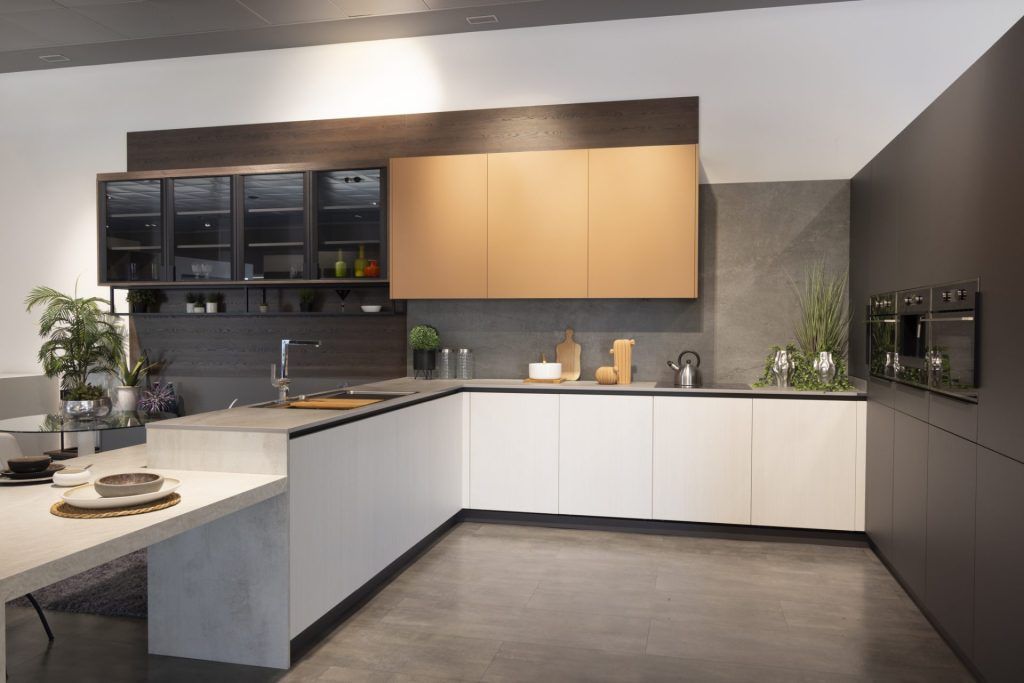
Glass is an accent, not a whole-kitchen strategy. The most successful modern kitchens use it sparingly – a feature column, a beverage station, a single upper run – so that it stays special. When every door is glass, the effect flattens and the maintenance multiplies. Restraint is what makes kitchen cabinets with glass doors look designed rather than busy.
Where to Use Glass-Front Cabinets in a Modern Kitchen
Placement is where good intentions become good design. When homeowners ask where kitchen cabinets with glass doors actually belong in a modern layout, these are the spots where glazed doors consistently deliver:
- A single feature run of uppers – usually flanking a window or a hood – to break up solid cabinetry and catch light.
- A beverage or coffee zone, where glass signals a dedicated, curated station and keeps everyday items visible but contained.
- A tall display column at the end of a run or beside open living space, lit from within for a gallery effect.
- Above a peninsula or island back, where glass keeps sightlines open into an adjoining room.
- Butler’s pantries and bar areas, where smoked or tinted glass adds mood without the pressure of a perfectly styled interior.
Avoid glass in the hardest-working, messiest cabinets – the ones holding pots, small appliances, and pantry overflow. Those belong behind solid doors that hide the chaos.
Wood Frames, Movement, and Long-Term Performance
A detail few homeowners consider: the frame that holds the glass is usually wood, and wood moves. As humidity rises and falls with the seasons, wood expands and contracts. According to the U.S. Forest Service’s Forest Products Laboratory Wood Handbook, wood in service is virtually always undergoing at least slight changes in moisture content, and properly dried, well-designed components keep those changes from causing problems.
For a glass door, that means the panel must be retained in a way that allows the surrounding frame to move slightly without cracking the glass or loosening the joinery. Quality construction – kiln-dried frames, engineered cores where appropriate, and correct glass channels – is what keeps a glass-front door square, quiet, and intact for decades. It is another reason the “who built it” question matters as much as the “what glass” question. For kitchen cabinets with glass doors, construction quality is not a luxury upsell but the practical difference between a panel that stays crisp and rattle-free for twenty years and one that develops stress cracks or loose joinery after a few seasons of humidity swings.
Bringing It Together: A Modern Kitchen With Glass, Done Right
Picture a warm-modern kitchen: handleless slab lowers in a soft greige, a run of reeded-glass uppers along one wall lit gently from inside, a smoked-glass beverage cabinet by the dining zone, and solid doors doing the heavy lifting everywhere the eye does not linger. Nothing is on display that should not be; light moves through the space; the cabinetry feels layered and intentional. That is the modern glass kitchen working as it should – not a hutch transplanted from another era, but a contemporary composition where glass plays a supporting, luminous role.
So do kitchen cabinets with glass doors work in a modern kitchen? They do – when the glass is chosen for the job, placed with restraint, built with safety glass, and framed to last. Get those four things right and glass stops being a question and becomes one of the most quietly powerful moves in modern kitchen design.
If you want to see the possibilities in person, our design team can show you glazed options across finishes and glass types at our Orange County showrooms, and help you decide exactly where glass belongs in your layout.
Frequently Asked Questions
No. While glass fronts once carried a traditional, china-hutch association, they have been fully absorbed into contemporary design. Reeded, fluted, frosted, and smoked glass in handleless or slab doors reads as thoroughly modern. What looks dated is not glass itself but heavy, ornate framing and clear glass over a cluttered interior. Used as a clean accent with the right glass type, glass-front cabinetry is current, not dated.
For most modern kitchens, reeded or fluted glass is the most versatile choice because it diffuses light, adds texture, and forgives an imperfect interior. Frosted or acid-etched glass suits minimalist, handleless designs where you want a soft, uniform glow. Clear glass is best reserved for a dedicated, lit display cabinet with organized contents. Smoked or tinted glass works well for beverage zones and darker palettes.
It is strongly recommended. Tempered safety glass breaks into small, blunt granules rather than sharp shards, which matters in an active kitchen. Safety glazing performance is defined federally under the U.S. Consumer Product Safety Commission’s 16 CFR Part 1201 and the voluntary ANSI Z97.1 standard. Even though cabinet doors fall outside the strict building-code definition of architectural glazing, quality cabinetmakers specify tempered glass, and you should confirm this before you buy.
They require a little more attention than solid doors because glass shows fingerprints and cooking residue, especially clear glass near the range or sink. Textured options like reeded and frosted glass hide smudges far better. The practical fix is placement: keep clear glass away from the greasiest zones, and the day-to-day cleaning becomes minimal – an occasional wipe with a standard glass cleaner. In practice, well-placed kitchen cabinets with glass doors are no more demanding to maintain than a glass shower screen or a stainless-steel appliance.
Restraint is the rule. In most modern kitchens, glass works best as an accent – one feature run of uppers, a display column, or a beverage station – rather than across every cabinet. Glazing everything creates a display case that demands constant tidying and flattens the visual impact. A single, well-placed run of glass keeps the effect special and the maintenance manageable.