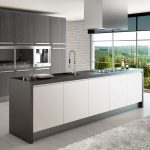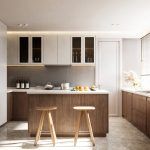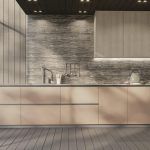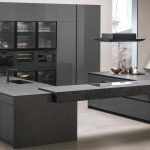

Short answer: no, black cabinets are not out of style in 2026 – but the way designers use them has changed dramatically. Black is a neutral, not a fad, and dark cabinetry is one of the fastest-rising directions in high-end kitchens right now. What has faded is the wall-to-wall, flat-black kitchen of a few years ago. In its place, the smart money is on layered, tactile black used as a grounding element: a moody island, deep lower cabinets, or a two-tone pairing that balances black cabinetry against warm wood and stone. If you’ve been holding off on black because you’re afraid it will look dated the day it’s installed, the current data – and our experience designing luxury kitchens across Orange County – should put your mind at ease.
At Prestige Cabinet, we design and build custom cabinetry for homeowners, designers, and builders from our Santa Ana and Laguna Niguel showrooms, and black is a request we field constantly. So let’s answer the question honestly, with real design-industry data rather than opinion, and give you a framework for deciding whether black cabinetry is right for your space.
The Short Answer: Black Cabinets Aren’t Out of Style – They’ve Evolved
Here is the clearest way to think about it. Trends come and go; neutrals endure. And black, along with white, gray, beige, and brown, sits firmly in the neutral family. According to the National Kitchen & Bath Association’s 2026 Kitchen Trends Report, an overwhelming 96% of design professionals named neutrals as the most popular color direction for the year ahead. Black doesn’t fight that trend – it belongs to it.
What the data shows is not a rejection of dark cabinetry but a refinement of it. Designers aren’t asking “black or not?” anymore. They’re asking “how much black, in what finish, and paired with what?” That shift – from a blunt yes/no to a question of proportion and pairing – is exactly why black cabinets remain a confident, current choice rather than a risky one.
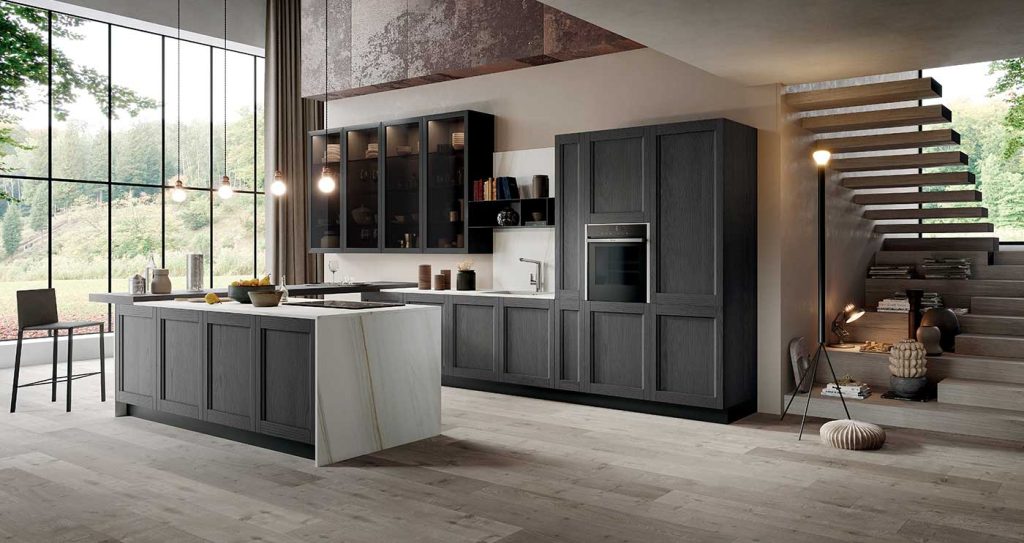
What the 2026 Data Really Tells Us About Dark Cabinetry
It’s easy to find a blog claiming black is “over” and another claiming it’s “hotter than ever.” Both are oversimplifications. Let’s look at what the two most authoritative sources in residential kitchen design actually reported for 2026.
NKBA’s 2026 Verdict: Neutrals Reign, Wood Grain Rises
The NKBA 2026 Kitchen Trends Report surveyed 634 kitchen and bath professionals – designers, architects, remodelers, and manufacturers. A few findings matter directly to anyone weighing black:
- Neutrals dominate at 96%, with greens (86%) and blues (78%) close behind. Loud, saturated colors ranked lowest.
- Wood grain is overtaking painted cabinetry, with 59% of professionals reporting it as the fastest-growing finish direction, and white oak the single most-requested species at 51%.
- Timeless, transitional design leads all styles at 72%, ahead of contemporary and organic looks.
- The flat, slab cabinet door is on the rise, cited by 69% of respondents as gaining popularity.
Read that carefully. The headline isn’t “black is dead.” It’s “warmth and neutrality win.” Black participates in a warm, neutral, timeless scheme beautifully – as long as it isn’t deployed as a cold, all-over statement.
Houzz Homeowner Data: Where Black Cabinets Actually Land
While NKBA surveys the pros, Houzz’s 2026 U.S. Kitchen Trends Study surveyed 1,780 homeowners actively renovating. The headline there was historic: wood overtook white as the single most popular cabinet color, chosen by 29% of renovators versus 28% for white – the first time wood has led in the study’s history.
So where does black sit for homeowners? Honestly, as a niche primary color. When you look at the full palette, black lands alongside beige, blue, and greige at roughly 5% of renovations as a whole-kitchen cabinet color. That number is important context, and we’d be doing you a disservice to hide it: very few people are wrapping an entire kitchen in black.
But – and this is the crucial nuance – that same study shows two-tone kitchens are thriving, with nearly one in five homeowners choosing contrasting upper and lower cabinets. That’s where black lives and breathes. Dark cabinetry used as lowers, as an island, or as one half of a two-tone scheme are far more common than the raw “5% all-black” figure suggests. The National Association of Realtors, which tracks how these choices affect the market, reported on the same Houzz findings, underscoring how closely cabinet color now ties to home value.
Why “Out of Style” Is the Wrong Question for Black Cabinets
Whenever a client asks whether black cabinets are out of style, we gently reframe the question. “Out of style” implies black was ever a trend – a look with a shelf life, like avocado-green appliances or glossy cherry cabinetry from decades past. Black isn’t that. It’s a foundational neutral that has appeared in sophisticated interiors for centuries, from lacquered Asian cabinetry to English butler’s pantries to mid-century modern kitchens.
Consider what black actually does in a room:
- It grounds a space. Dark cabinetry anchors a kitchen the way a dark suit anchors an outfit – it reads as intentional and polished.
- It creates contrast. Against white quartz, brass hardware, or a natural wood island, black cabinets deliver the drama that makes a kitchen photograph and feel high-end.
- It hides visual noise. A deep, matte finish absorbs the small chaos of daily life better than a stark white door that shows every shadow and scuff line.
None of those qualities expire. A color that performs a permanent design job doesn’t go “out of style” – it goes in and out of fashion emphasis. Right now the emphasis has shifted toward warm woods, which simply means black is sharing the stage rather than owning it. For a homeowner, that’s good news: black paired with wood is one of the most enduring combinations in the book.
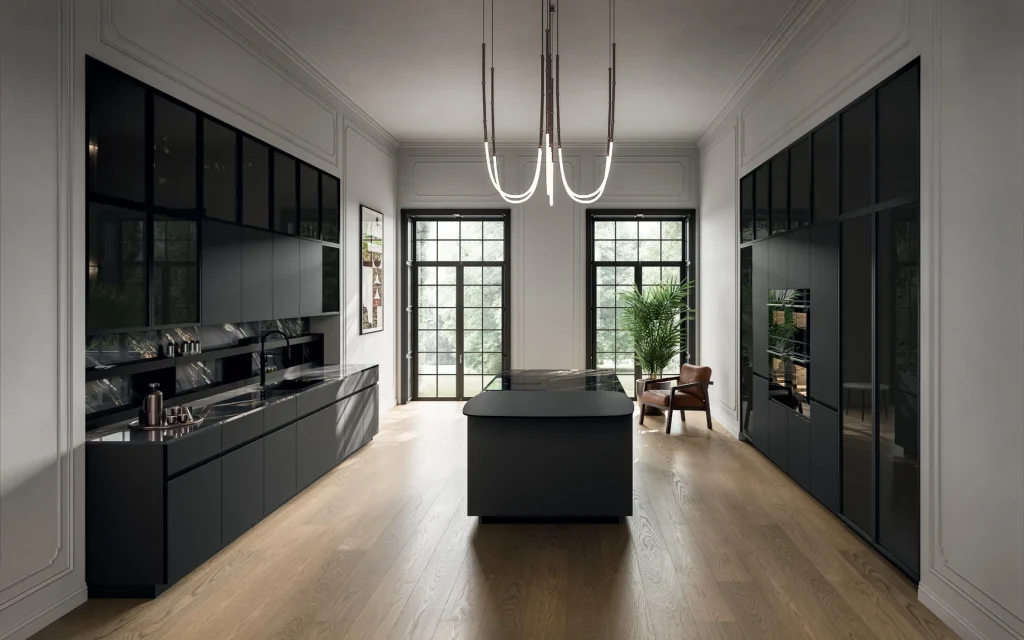
The Real Shift: From All-Black Kitchens to Layered Black
If there’s a single takeaway from the 2026 reports, it’s this: the application of black has matured. Here’s what that looks like in practice.
The All-Black Kitchen Is Fading
The Instagram-famous, floor-to-ceiling black kitchen – black cabinets, black walls, black countertops, black hardware – peaked a few years ago and now appears on many designers’ “dated” lists. Not because black is bad, but because monochrome maximalism runs counter to the warm, layered, livable direction homeowners want. An all-black room can feel like a cave, show every speck of dust, and read as a specific moment in time rather than a timeless space.
If you’re chasing longevity, wrapping an entire kitchen in flat black is the one approach we’d steer you away from in 2026.
Black as a Grounding Element Is Thriving
The winning move is restraint. In showroom after showroom and project after project, the black kitchens that feel current – and that will still feel current in ten years – use black as one deliberate layer, not the whole story. The most successful applications we see include:
- The black island. A single dark island against lighter perimeter cabinetry is arguably the most requested “black” look in luxury kitchens today. It concentrates the drama without darkening the room.
- Black lower cabinets with lighter uppers. This two-tone formula keeps sightlines bright while grounding the base of the kitchen – and it flatters almost every countertop.
- Black paired with natural wood. Deep charcoal or true black against walnut, white oak, or smoked oak is the pairing that best captures 2026’s warm-neutral mood.
- Black accents in the pantry or scullery. Reserving black for a butler’s pantry or a single feature wall of cabinetry gives you the richness of the color in a lower-commitment way.
Used this way, dark cabinetry stops being a gamble and becomes a design tool. The question is no longer whether to use black, but where.
Matte vs. High-Gloss: Choosing the Right Black Cabinet Finish
Finish is where black kitchens are won or lost, and it’s the single decision that most affects how “current” your cabinets look. The 2026 mood favors tactile, light-diffusing surfaces over mirror-like shine, but both matte and gloss have their place.
- Matte black cabinets read soft, velvety, and modern. A low-sheen surface diffuses light instead of bouncing it, which softens the intensity of black, hides fingerprints better than gloss, and photographs without glare. Matte is the safer choice for longevity and for busy households.
- High-gloss black cabinets deliver a dramatic, reflective, jewel-box effect that can make a small or contemporary kitchen feel luxe and expansive. The trade-off is maintenance: gloss shows every fingerprint and smudge and demands more frequent wiping.
The matte-versus-gloss decision deserves real thought, because sheen interacts with lighting, durability, and cleaning in ways that photos never show. The most reliable way to judge it is to see finishes side by side – you can explore the full range of matte, gloss, and wood-grain options in our modern kitchen collections, and our complete guide to modern kitchen cabinets walks through how finish choice shapes the whole design.
There’s also a texture conversation worth having. Beyond flat matte and slick gloss, textured and wood-grain black finishes are gaining ground because they add tactile depth and disguise everyday wear even better than a smooth surface. A grained dark finish catches light unevenly in a way that feels organic and expensive, and it aligns perfectly with 2026’s appetite for warmth and natural character. If you want the richness of the color with the forgiving, lived-in quality homeowners are chasing this year, a textured finish deserves a serious look.
A quick reality check on maintenance, because it comes up constantly: yes, black cabinets show dust and fingerprints more than light ones – gloss more than matte. But this is entirely manageable with a soft microfiber cloth and a mild, pH-balanced cleaner. It’s a livability consideration, not a reason to abandon the color.
Design Pairings That Keep Black Cabinets Looking Current
Black cabinets are only as good as what surrounds them. Get the pairings right and the look feels timeless; get them wrong and even the best cabinetry can feel heavy or dated. Here’s how our design team keeps dark kitchens fresh.
Countertops and Backsplashes
Contrast is your friend. Because black absorbs light, you want at least one bright, reflective surface to balance it.
- Light quartz or quartzite countertops are the classic counterweight – white, cream, or softly veined stone against black cabinetry is a combination that never reads as trendy.
- Warm-toned natural stone with movement adds richness without fighting the black.
- Slab backsplashes that carry the countertop material up the wall give a seamless, modern feel that suits black cabinets especially well.
Hardware and Warm Metals
Hardware is the jewelry of the kitchen, and against black it stands out. The 2026 direction leans warm.
- Brass, bronze, and champagne-gold hardware pops beautifully against dark cabinetry and reinforces the warm-neutral mood.
- Matte black hardware on matte black cabinets creates a tonal, sophisticated, hardware-that-disappears look for the minimalists.
- Mixed metals, used with restraint, can layer warmth and interest – just keep one metal dominant.
Lighting Is Non-Negotiable
This is the tip most homeowners underestimate. A dark kitchen lives or dies by its lighting. Because black cabinets absorb rather than reflect light, you must plan illumination generously:
- Under-cabinet lighting to wash the countertop and prevent shadowy work zones.
- Layered ambient and task lighting so the room never feels dim.
- Interior cabinet lighting for glass-front or display sections, which turns dark cabinetry into a showpiece.
Get the lighting right and black cabinets feel intimate and luxurious. Skimp on it and they feel like a cave – the number-one mistake we correct in consultations.
Are Black Cabinets a Smart Long-Term Investment?
For many homeowners, the real worry behind “are black cabinets out of style?” is resale. Will a bold choice today cost you buyers tomorrow? It’s a fair question, and the honest answer is nuanced.
Buyers overwhelmingly gravitate toward neutral, timeless kitchens – and black, as we’ve established, is a neutral. A tastefully executed black kitchen, especially a two-tone or black-island design paired with warm wood and quality stone, tends to read as sophisticated and move-in ready. Because the National Association of Realtors and design bodies alike track how closely kitchen finishes now influence perceived home value, a well-designed dark kitchen can genuinely help a listing stand out in a sea of identical white kitchens.
The caveat is the same one we’ve repeated throughout: it’s the all-black, high-drama kitchen that carries resale risk, because it appeals to a narrower slice of buyers. Layered, balanced black – the kind the current data supports – is the resale-friendly path. If broad appeal is a priority, choose custom cabinetry in a quality finish, keep the black proportional, and pair it with light, warm, natural materials.
Two practical guardrails protect your investment:
- Prioritize finish quality. A cheap black finish that scratches, fades, or looks flat will date far faster than the color itself ever could. Well-built, well-finished black cabinetry ages gracefully.
- Keep it balanced. Black as one layer in a warm scheme has staying power; black as the entire scheme is a personal statement that not every future buyer will share.
Black Cabinets Beyond the Kitchen
It’s worth remembering that cabinetry isn’t only a kitchen conversation. The same logic applies across the home, and black is often easier to justify outside the kitchen because the spaces are used differently.
- Home offices and libraries are natural homes for dark cabinetry – black built-in bookshelves and study cabinetry read as scholarly, focused, and timeless.
- Walk-in closets and dressing rooms use black to create a boutique, luxe atmosphere, especially with good interior lighting and glass fronts. Explore the possibilities in our closets and bedroom collections.
- Laundry and mudrooms can carry a bolder black without the resale sensitivity of a primary kitchen.
If you love black but feel cautious about committing your whole kitchen to it, one of these spaces can be the perfect place to enjoy the color you want.
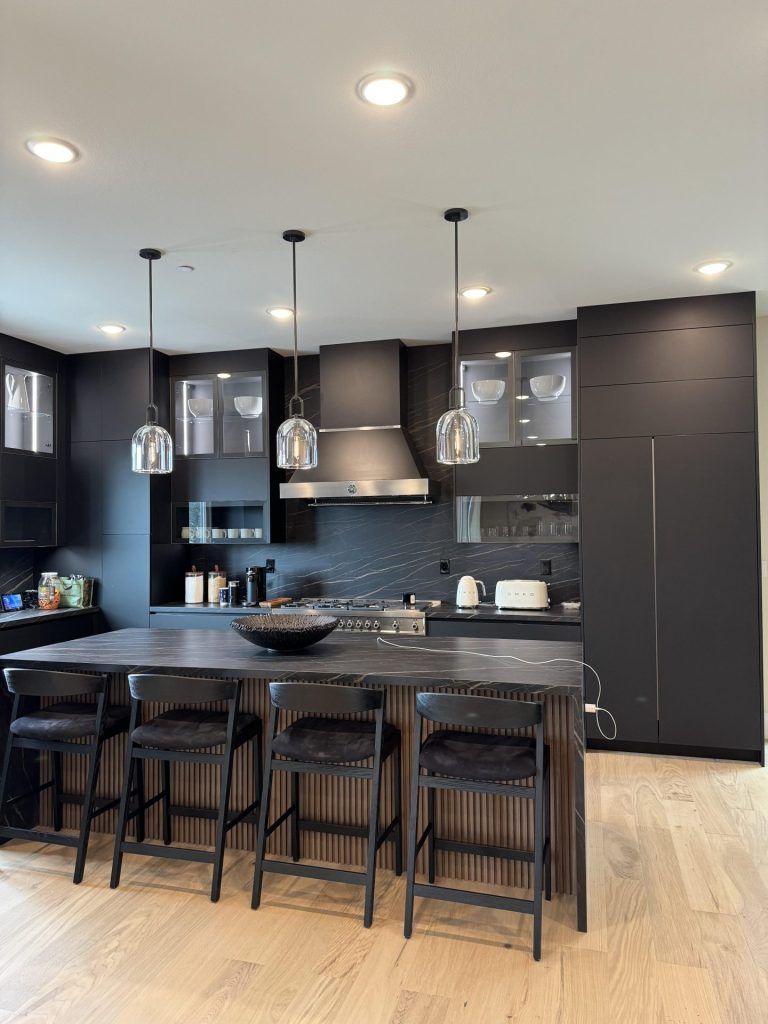
How to Get Black Cabinets Right: A Designer’s Checklist
Pulling it all together, here’s the framework our team uses to make sure black cabinets look intentional, current, and built to last:
- Use black as a layer, not a blanket. Island, lowers, or a two-tone pairing – not the entire room.
- Choose your finish deliberately. Matte for softness and low maintenance; gloss for drama and reflectivity. Match the finish to your lifestyle, not just the photo you saved.
- Anchor it with warmth. Natural wood, warm metals, and soft neutrals keep black from feeling cold.
- Over-invest in lighting. Layered, generous lighting is the difference between “luxurious” and “cave.”
- Insist on finish quality. The color is timeless; a poor finish is not. Quality construction is what actually protects your investment.
- Balance for resale if it matters to you. Proportion and pairing keep a dark kitchen broadly appealing.
Follow that framework and the phrase “out of style” simply won’t apply.
The Verdict: Are Black Cabinets Out of Style in 2026?
No. Black cabinets are not out of style – they’re being used more thoughtfully than ever. The 2026 data from both NKBA and Houzz points to a warm-neutral, layered, timeless direction, and black fits that story naturally when it’s deployed with intention. The all-over black kitchen is fading, but black as a grounding element – on an island, as lower cabinets, in a two-tone scheme, paired with wood and warm metals – is very much current and, frankly, timeless.
If you’re drawn to black, don’t let a headline scare you off. Let proportion, finish, pairing, and lighting guide the design, and you’ll have a kitchen that feels sophisticated for decades, not seasons. That’s the difference between chasing a trend and making a lasting design choice – and it’s exactly the conversation we love having with clients.
Curious how black would look in your space? See it for yourself at prestige-cabinet.com, or book a free design consultation and visit our Santa Ana and Laguna Niguel showrooms to compare finishes in person.
Frequently Asked Questions About Black Cabinets
No. Black is a neutral, and neutrals dominate 2026 design, with the NKBA reporting 96% of professionals name them the leading color direction. What’s fading is the all-over, flat-black kitchen. Black used as a grounding layer – an island, lower cabinets, or one half of a two-tone scheme paired with warm wood – is current and enduring.
They can if the room is under-lit or lacks contrast, because black absorbs light. But black cabinets don’t inherently shrink a space. With generous layered lighting, light countertops, and reflective surfaces to balance them, dark cabinetry can actually add depth and make a kitchen feel richer and more expansive. Using black on just the lowers or island also preserves bright sightlines.
Yes, more than light cabinets – and high-gloss shows more than matte. This is a livability consideration, not a dealbreaker. A matte or textured finish hides smudges far better than gloss. Routine care with a soft microfiber cloth and a mild, pH-balanced cleaner keeps black cabinetry looking sharp with minimal effort.
Warm and light tones create the best balance. Think white or cream quartz, warm natural stone, walnut or white oak wood accents, and brass, bronze, or champagne-gold hardware. These pairings reflect 2026’s warm-neutral mood and keep black cabinets from feeling heavy or cold. Two-tone schemes with light uppers over black lowers are especially popular.
Not when done well. Buyers favor neutral, timeless, move-in-ready kitchens, and black qualifies as a neutral. A balanced, well-finished black kitchen – particularly a two-tone or black-island design – can help a home stand out. The resale risk lies almost entirely with the all-black, high-drama look, which appeals to a narrower audience. Keep black proportional, pair it with warm materials, and prioritize finish quality.