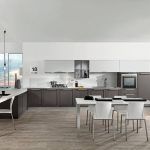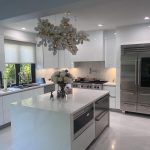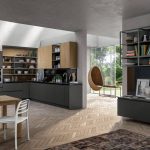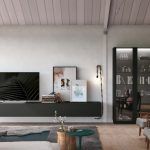
Framed vs frameless cabinets comes down to one structural detail: whether a solid-wood face frame is fastened to the front of the cabinet box. Framed cabinets carry that frame, and the doors and drawers mount to it. Frameless cabinets leave it off, so the doors hang directly from the box sides on concealed hinges. Framed construction gives you front rigidity, installation forgiveness, and traditional detail. Frameless construction gives you fuller interior access, wider drawers, and the tight, continuous lines of contemporary design. Neither wins everywhere. The better choice depends on your home’s architecture, how you use your storage, and how well the cabinets are built.
At Prestige Cabinet, we design and install Italian-made cabinetry for Orange County homes from our Santa Ana and Laguna Niguel showrooms. Both our modern and classic collections are built on frameless European boxes, so we work with that construction every day, and we know exactly where its limits are. Our designers walk homeowners through the framed vs frameless cabinets question before a single drawing is made, and the same concerns come up in almost every conversation.
If you want the regional side of this topic, our guide to European cabinets vs American covers it. This guide goes deeper into the construction itself: how each cabinet box is put together, how to tell which type you already have, how each performs room by room, the myths worth ignoring, and the questions that settle the decision.
What Are Framed Cabinets? Face-Frame Construction Explained
Framed cabinets, also called face-frame cabinets, start as a simple five-sided box: two sides, a top, a bottom, and a back, usually cut from plywood or particleboard. A frame of solid-wood rails and stiles is then glued and fastened across the open front. Every door, drawer front, and hinge attaches to that frame rather than to the box itself. It is the traditional way cabinets have been built in North America, and it is still what most people picture when they think of a classic kitchen.
The frame does real structural work. It squares the box during assembly, stiffens the front edge against racking, and gives installers solid wood to clamp and screw neighboring cabinets together. It also hides the raw edges of the box panels, which is one reason framed construction has always been forgiving for cabinet shops and installers alike.
Anatomy of a Face Frame
- Stiles: the vertical members on the left and right of each opening. Where two cabinets meet, their stiles sit side by side.
- Rails: the horizontal members across the top and bottom, plus any rail that separates a drawer from the door below it.
- Center stile (mullion): a vertical divider that many wide base and wall cabinets add between a pair of doors. It strengthens the opening but splits it in two.
- Scribe allowance: extra frame width at the ends of a run that an installer can trim to follow an uneven wall.
Door Overlay Options on Framed Boxes
How much of the frame the doors cover defines the look of a framed kitchen:
- Partial overlay: doors cover part of the frame, leaving a visible border around each one. It is the most traditional framed look and usually the simplest to build.
- Full overlay: doors cover nearly all of the frame, so only the narrow gaps between doors reveal it. It gets close to a frameless look while keeping the frame behind.
- Inset: doors sit flush inside the frame openings, with a fine, even reveal all around. It is the most demanding construction to build and install, and our Inset Cabinets page explains how it works and why it has always signaled the top of the market.
Hinges on Framed Cabinets
Framed cabinets traditionally used hinges that mount to the face of the frame and stay partly visible. Many manufacturers now offer concealed, adjustable hinges designed for face frames as well, so hinge style alone no longer tells you which construction you are looking at. What matters in the framed vs frameless cabinets comparison is where the hinge is anchored: on a solid-wood frame, or on the side panel of the box.
What Are Frameless Cabinets? Full-Access Construction Explained
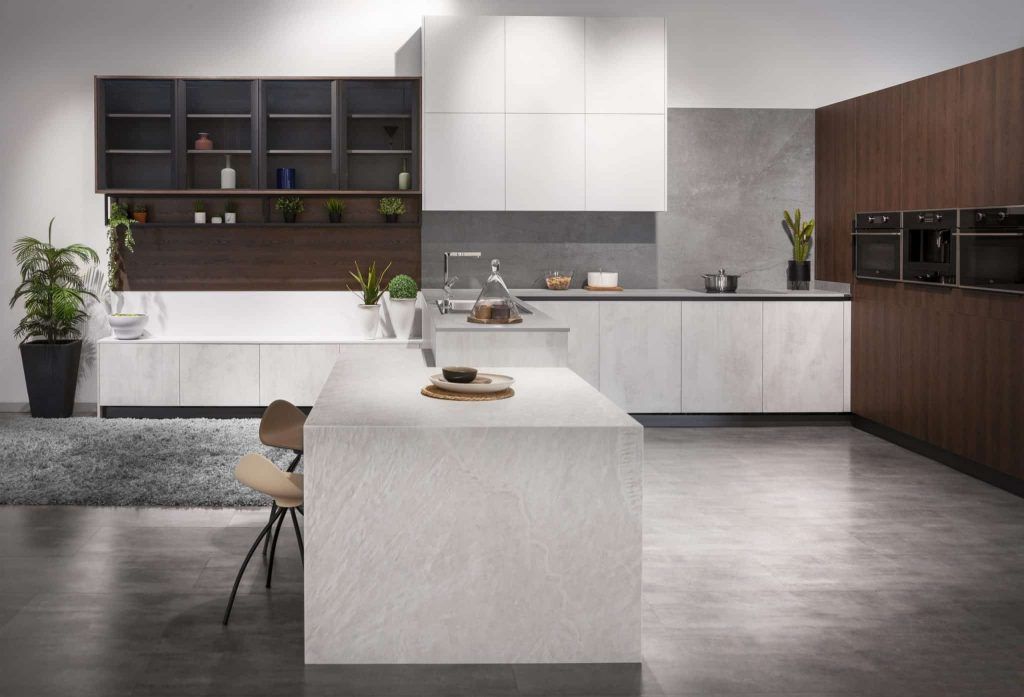
Frameless cabinets, often called European-style or full-access cabinets, remove the face frame entirely. The front edges of the box panels become the cabinet face, and those edges are sealed with edge banding. Doors attach to the inside of the side panels on concealed cup hinges, and drawers ride on full-extension slides mounted to the same panels. With nothing in front of the opening, what you see when a door swings open is the full interior of the box.
Because there is no frame to stiffen the front, the box has to be strong on its own. Quality frameless cabinetry gets that strength from rigid panels, a properly fixed back, accurate machining, and tight joinery. When those fundamentals are right, the box is extremely durable. When they are skipped, problems show up sooner than they would in a framed cabinet, a point we return to in the durability section below.
Why Frameless Cabinets Are Called “Full-Access”
The name describes the everyday experience. With no stiles narrowing the opening and no center stile dividing wide bases, a frameless drawer can run almost the full interior width of the cabinet. Large pots, sheet pans, and stacked dinnerware come out from above instead of being angled around a divider. That is why frameless kitchens so often replace door-and-shelf base cabinets with deep drawers.
Concealed Hinges and the System Hole Line
Most frameless cabinetry is drilled with a standardized line of holes along the inside of each side panel. Hinge plates, shelf supports, and drawer hardware all locate from that line, which keeps every component aligned from box to box and makes replacement parts simple to fit. The concealed cup hinges themselves adjust in several directions with a screwdriver, so an installer can tune every gap until a run of doors reads as one surface.
Door Styles That Suit Frameless Boxes
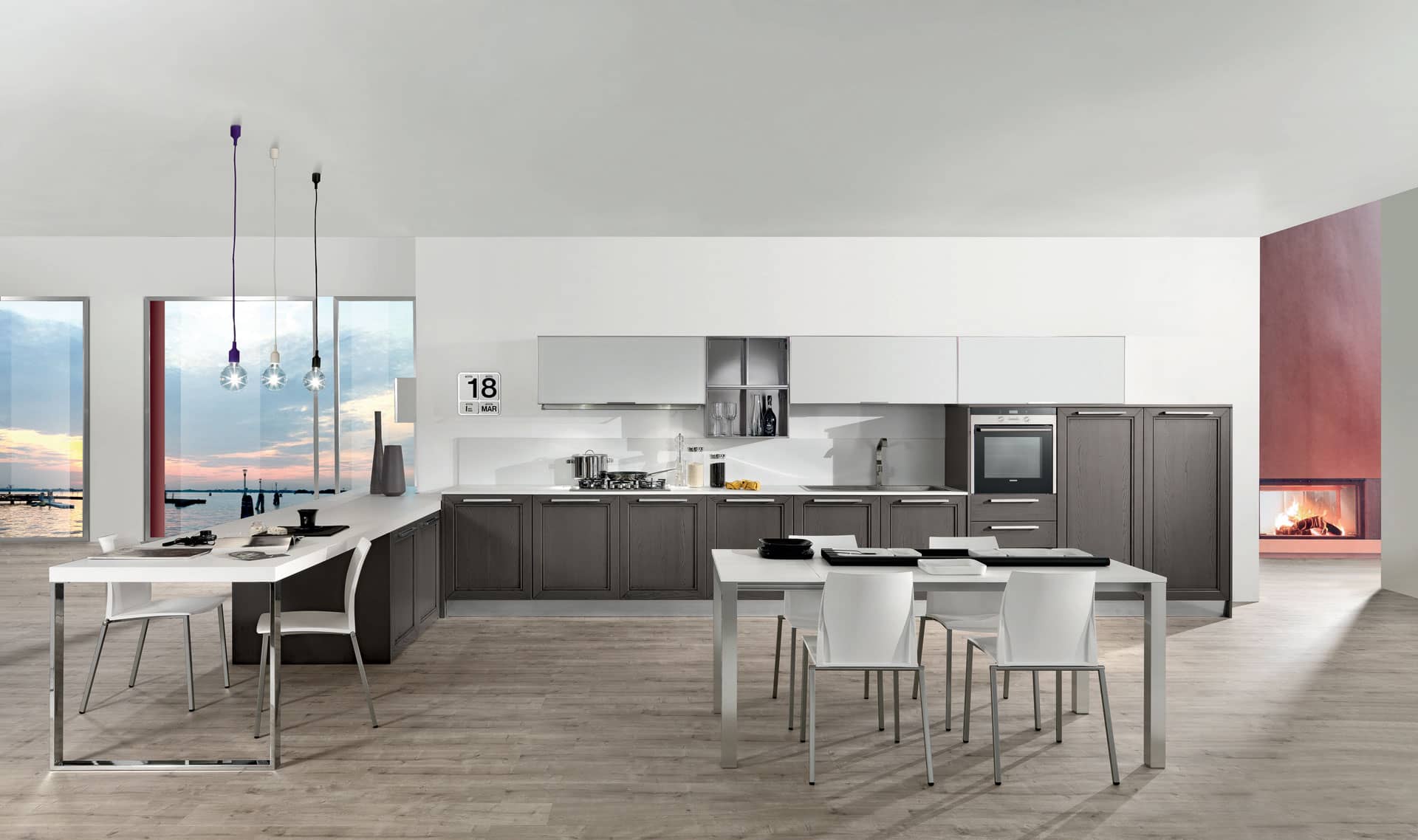
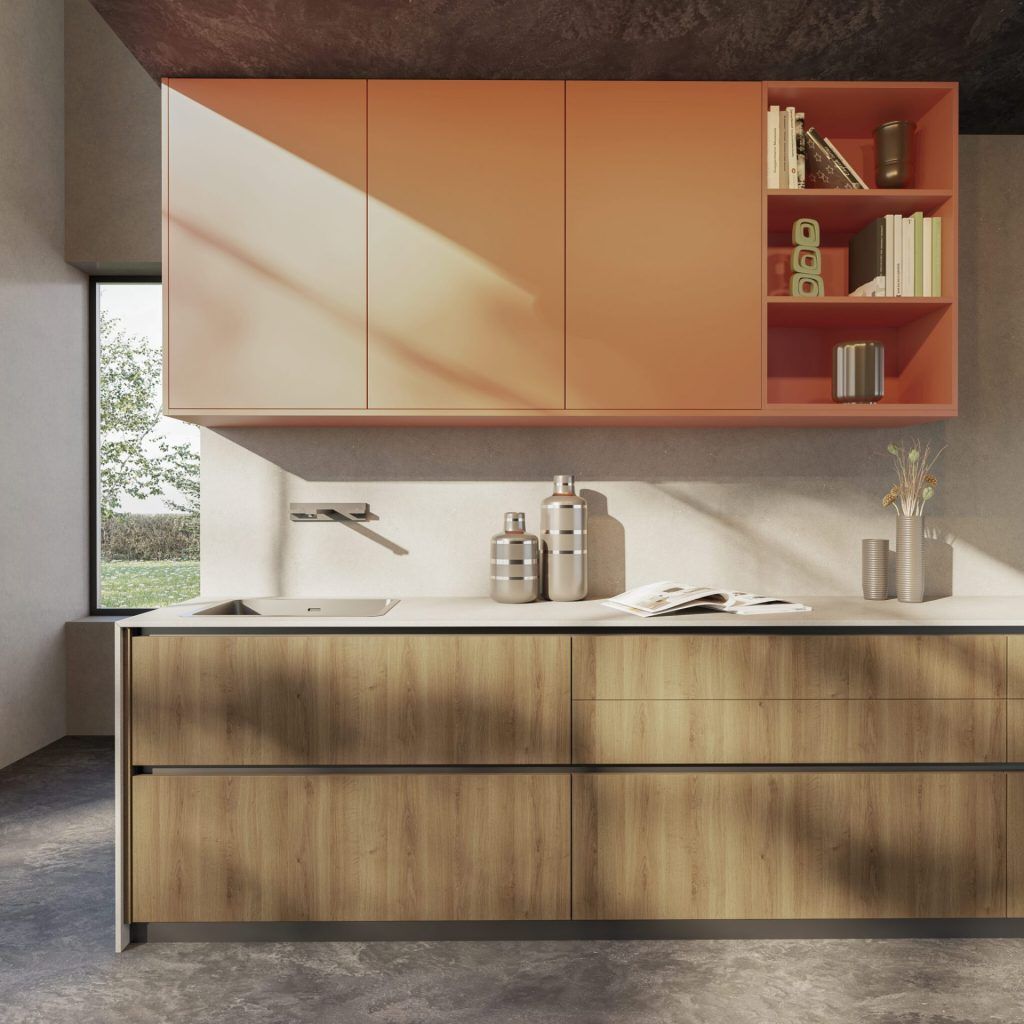
Frameless boxes nearly always carry full-overlay doors, which cover the entire cabinet front with only slim, consistent gaps between them. That makes them the natural base for flat slab cabinet doors and handleless kitchen cabinets, both of which depend on tight, even reveals. They carry traditional fronts too: a five-piece door on a frameless box is exactly how our European Shaker kitchen cabinets deliver a classic face with modern access. For an overview of the construction across our modern range, see our European kitchen cabinets page.
How to Tell If Your Cabinets Are Framed or Frameless
Planning to reface, replace a hinge, or add organizers? This quick check takes only a few minutes in your own kitchen:
- Open a door and look at the cabinet edge. A border of solid wood around the opening means a face frame. A thin, banded panel edge means frameless.
- Check where the hinge is screwed. A hinge anchored to the front border belongs to a framed cabinet. A hinge plate screwed to the inside of the side panel points to frameless.
- Look for a center stile. A vertical divider between a pair of doors on a wide base cabinet is a face-frame feature.
- Study the gaps between closed doors. Visible wood between doors usually means framed with partial overlay. Slim, uniform gaps with no wood behind them suggest frameless, though full-overlay framed cabinets can look similar from the front.
- Look inside the side panels. A neat row of small, evenly spaced holes running down each side is a common sign of frameless construction.
Knowing which system you have matters before you order new doors, hinges, or organizers, because hardware for one is rarely a drop-in fit for the other. It is the most practical first step in any framed vs frameless cabinets decision for an existing kitchen.
Framed vs Frameless Cabinets: Side-by-Side Differences
The table below summarizes how framed vs frameless cabinets compare on the points homeowners ask us about most. The sections after it explain each one.
| Feature | Framed (face-frame) | Frameless (full-access) |
| Front structure | Solid-wood frame stiffens the box face | Box panels carry all the strength |
| Door overlay | Partial overlay, full overlay, or inset | Almost always full overlay |
| Interior access | Openings narrowed by stiles; wide bases often split by a center stile | Openings span nearly the full box width |
| Drawers | Drawer boxes must clear the frame opening | Drawer boxes run close to the full interior width |
| Installation | Frame can be scribed to uneven walls | Boxes must be level, plumb, and in plane |
| Long-term adjustment | Depends on hinge type and frame movement | Concealed hinges re-adjust with a screwdriver |
| Natural style | Traditional, farmhouse, cottage | Modern, contemporary, transitional |
Storage Capacity and Interior Access
A face frame overlaps the inner edge of every opening, so the space you can reach through is narrower than the box behind it. On a wide sink or drawer base, a center stile can also block large items and pull-out hardware. Frameless boxes remove both obstacles. You will see claims online that frameless construction adds a fixed percentage of storage. We avoid quoting one, because the real gain depends on cabinet widths and on how wide a given manufacturer makes its stiles. What does not vary is the experience: in the framed vs frameless cabinets storage comparison, frameless wins on access, especially in base drawers, corners, and tall pantry units.
Strength, Rigidity, and Durability
The face frame is the main reason framed cabinets have a reputation for toughness. It braces the front of the box and protects panel edges from knocks. Frameless cabinets have to earn their rigidity through the box itself. The Kitchen Cabinet Manufacturers Association (KCMA), which administers the ANSI/KCMA A161.1 certification program, confirms that frameless cabinets are eligible for its quality seal and notes that, without a structural face frame, the box itself must be especially robust. KCMA also reports that frameless cabinets show a higher initial failure rate on its base front joint loading test, and that edge-banded slab doors can swell if moisture gets past poorly machined seams.
The takeaway in the framed vs frameless cabinets durability debate is not that one system is weak. It is that frameless quality lives in details you cannot see in a photo: panel quality, joinery, edge sealing, and hardware. Ask any supplier whether a cabinet line has been tested to a recognized performance standard.
Cabinet Box Materials and Indoor Air Quality
Both systems use engineered panels. A framed cabinet typically pairs a plywood or particleboard box with a solid-wood frame, while frameless cabinets usually use engineered panels throughout, faced with laminate, lacquer, or real wood veneer. That is not a shortcut. The USDA Forest Products Laboratory’s Wood Handbook explains that the alternating grain of plywood’s cross-laminated veneers gives it excellent stability along both its length and its width, while solid wood keeps responding to changes in humidity. A wide engineered panel stays flatter than a wide solid board.
Air quality rules apply to both styles equally. The California Air Resources Board’s composite wood products regulation requires hardwood plywood, particleboard, and MDF, along with finished goods such as cabinets sold in California, to meet its formaldehyde emission standards. Whichever side of the framed vs frameless cabinets choice you land on, ask to see the compliance label.
Installation and Wall Tolerances
Installation is where framed cabinets earn their clearest advantage. An installer can scribe the frame to follow a wavy wall or an out-of-plumb corner, and small errors disappear behind its edges. Frameless runs offer no such cover. Because doors sit edge to edge with uniform gaps, every box must be level, plumb, and in plane with its neighbor, with adjustable legs, fillers, and scribe panels absorbing the irregularities of the room. When comparing framed vs frameless cabinets for an older home with settled floors, weigh the installer’s frameless experience as heavily as the cabinets themselves.
Adjustment, Repairs, and Refacing
After installation, the advantage swings toward frameless. Concealed hinges and adjustable drawer fronts let you realign doors years later with a screwdriver, and system-drilled boxes accept replacement hardware easily. Framed cabinets are the easier candidates for refacing: because the frame provides a solid surface, a refacing crew can veneer the existing frame and hang new doors without replacing the boxes. Converting framed cabinets to a true frameless look is a different matter, since the frame is part of the structure. If refacing versus replacing is on your mind, it is one of the most useful framed vs frameless cabinets questions to raise early.
What Drives Cost in Each System
Construction method alone rarely decides a cabinet budget. KCMA identifies material quality and market segment as the main drivers of cabinet cost, and that matches what we see when homeowners bring us competing quotes. Frameless work demands precise machining and installation, while framed work adds solid-wood frame material and joinery, so the two often land closer together than people expect. The bigger swings usually come from door finish, hardware quality, interior organizers, and whether the boxes are made to measure. When you compare framed vs frameless cabinets quotes, match those variables first, then judge value by usable storage and service life.
Choosing Framed or Frameless Cabinetry by Room and Home Style
Kitchens
The kitchen is where the framed vs frameless cabinets decision carries the most weight, because it is where storage access and daily wear matter most. If you cook often, prefer deep drawers to bending into cupboards, or want a continuous run of slab or handleless fronts, frameless is usually the stronger fit. If the kitchen sits in a period home with visible millwork, or you specifically want partial-overlay doors with exposed frame lines, framed construction keeps the architecture honest.
Bathroom Vanities and Laundry Rooms
Vanities and laundry cabinets are small, hardworking, and often close to water. Usable drawer width matters more than people expect in a narrow vanity, which favors frameless. Moisture discipline matters just as much: well-sealed panel edges on a frameless box, or a well-finished frame on a framed one, protect the cabinet far more than the construction label does.
Closets, Wardrobes, and Built-Ins
Wardrobes, media walls, and library walls almost always benefit from frameless construction. Long runs of matching doors, adjustable shelving on a drilled hole line, and integrated lighting all work best without frames interrupting the interior. Explore our closets and bedroom and living area collections for wardrobe and built-in designs beyond the kitchen.
Traditional, Transitional, and Modern Homes
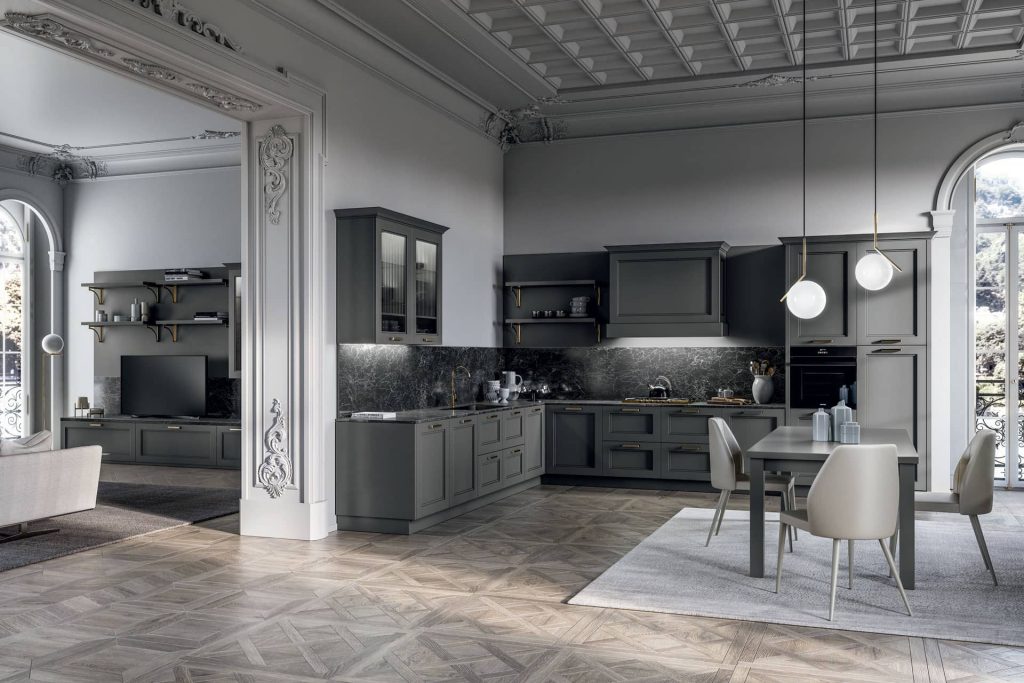
Home style is a starting point, not a rule. Modern and contemporary homes lean frameless almost by default. Traditional and farmhouse homes have long leaned framed, yet a transitional approach, with a five-piece door on a frameless box, now covers much of the middle ground. If you are torn on framed vs frameless cabinets for a transitional home, start with the door style you love and let the construction follow.
Common Myths About Framed vs Frameless Cabinets
A few persistent beliefs push homeowners toward the wrong choice. Here is what we tell clients in the showroom:
- “Frameless means particleboard, framed means real wood.” Both systems use engineered panels in the box. Quality depends on panel grade and construction, not on whether a frame is present.
- “Framed cabinets are always stronger.” A face frame adds front rigidity, but a well-built frameless box tested to a recognized standard performs reliably over the long term.
- “Frameless only works in modern kitchens.” Shaker, raised-panel, and glass-front doors all mount to frameless boxes.
- “European means imported.” “European” describes a construction method, not a country of origin. Many domestic shops build frameless lines.
- “The difference disappears once the doors are closed.” From across the room, a full-overlay framed kitchen and a frameless one can look alike. Open a drawer, though, and the framed vs frameless cabinets difference shows up every single day.
The Bottom Line: Choosing With Confidence at Prestige Cabinet
There is no universal winner in the framed vs frameless cabinets debate, only a better fit for your home. Choose framed construction when installation forgiveness, exposed frame detail, or easy refacing matter most. Choose frameless when you want maximum access, wide drawers, clean lines, and doors you can fine-tune for years. In both cases, the quality of the box, the hardware, and the installation will shape your daily experience far more than the label.
At Prestige Cabinet, our modern and classic collections are manufactured in Italy on frameless European boxes and fitted with European hardware backed by a lifetime warranty. Our designers will also tell you honestly when a framed approach would suit your house better. The fastest way to decide is to feel the difference yourself: open the drawers, swing the doors, and compare door styles side by side at one of our showrooms.
- Santa Ana: 650 S Grand Ave, Santa Ana, CA 92705
- Laguna Niguel: 23811 Aliso Creek Rd, Unit 160, Laguna Niguel, CA 92677
Prefer to start at home? Book a free 3D design consultation, and we will show you how your kitchen would look and work before you commit to anything.
Frequently Asked Questions About Framed vs Frameless Cabinets
Neither is better across the board. Frameless cabinets offer more accessible storage, wider drawers, a cleaner contemporary look, and easy long-term adjustment. Framed cabinets offer extra front rigidity, more forgiveness during installation, simpler refacing, and authentic traditional detail. The right answer to framed vs frameless cabinets depends on your home’s architecture, how you use your kitchen, and the quality of the manufacturer and installer.
Not inherently. Construction style is only one factor in cabinet cost. Frameless boxes require precise machining and careful installation, while framed cabinets add solid-wood frame material and joinery. Door finish, hardware, interior organizers, and custom sizing usually move the final number more than the construction method. Compare quotes with matching materials and hardware to see the real difference for your project.
They can be, because durability depends more on build quality than on construction style. Without a stiffening frame, a frameless box relies on rigid panels, strong joinery, and well-sealed edges. Look for third-party performance testing, such as ANSI/KCMA A161.1 certification, and ask how panel edges are sealed around the sink and dishwasher. On strength, a well-built box of either type will outlast a poorly built one, which is why the framed vs frameless cabinets question always comes back to build quality.
Frameless boxes carry Shaker, raised-panel, and glass-front doors easily, which is how transitional kitchens pair a classic face with full-access storage. True inset doors are different, because inset has traditionally relied on a frame around each opening. If inset is on your wish list, ask any supplier exactly how its inset system is built.
Yes, and many homes do. A framed kitchen can sit comfortably beside frameless closets, vanities, or a media wall, because each room is judged on its own needs. Mixing systems within one continuous kitchen run is harder, since door gaps, hardware, and reveal lines will not match. Most designers keep a single system per room so the framed vs frameless cabinets choice stays consistent wherever you look.