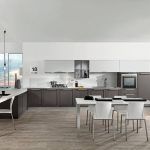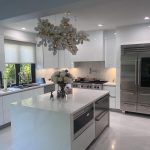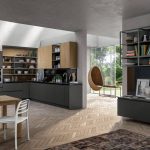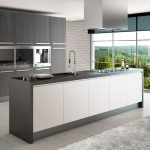

European cabinets are defined by how they are built: frameless boxes, full-overlay doors, and precision-drilled panels. Italian cabinets are defined by where and how they are designed: they are almost always built on that same frameless European method, then layered with Italy’s design culture, finishes, and material innovation. So the real question in the European vs Italian cabinets debate is not which construction is stronger. It is whether you want a construction standard, or a construction standard plus a design point of view.
That distinction matters more than most homeowners expect. On our showroom floors in Santa Ana and Laguna Niguel, “European or Italian?” is one of the first questions people ask, and it is usually asked as if the two were competing products. They are not. Understanding how they overlap, and where they genuinely diverge, will save you from paying for a label instead of a kitchen.
This guide to European vs Italian cabinets breaks down the comparison the way our designers walk clients through it: what each term actually means, the six differences that affect your daily life, how to verify quality, and how to decide which direction fits your home.
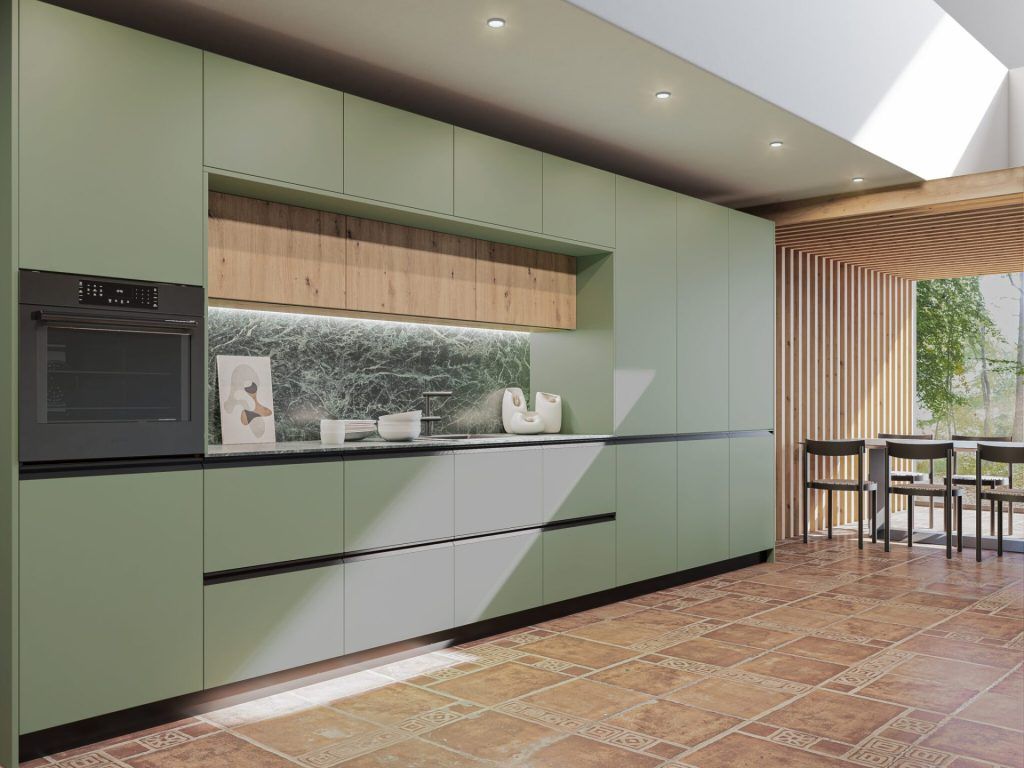
What Are European-Style Cabinets?
“European-style” is a construction category, not a country of origin. The term describes a way of building cabinet boxes that became dominant across Europe and was later adopted by manufacturers worldwide.
Frameless Construction and Full-Overlay Doors
Traditional American cabinets attach doors to a face frame, a rectangle of solid wood glued to the front of the box. European-style cabinets remove that frame entirely. The box sides carry the load, and the doors mount directly to the interior walls with concealed, adjustable hinges.
That single decision produces the features people associate with modern European kitchens:
- Full-overlay doors that cover the entire box, leaving only slim, uniform gaps between fronts
- Full interior access, with no frame lip narrowing the opening or blocking drawers
- Wider drawers and roll-outs, since nothing interrupts the cabinet width
- Clean, continuous reveal lines that suit slab doors and handleless designs
- System-based drilling, where shelf pins, hinges, and drawer runners align to a standardized hole pattern for precise, repeatable assembly
Frameless construction is the common ground in the European vs Italian cabinets conversation, so it is worth understanding before you look at finishes or door styles. Because the box itself carries the structure, the quality of the side panels, the joinery that connects them, and the way the back panel is fixed all matter more than they would in a framed cabinet. A weak frameless box can rack out of square during installation; a well-built one stays true for decades.
If you want a deeper technical comparison of the two construction methods, our guide to framed vs frameless cabinets covers box construction, joinery, and storage capacity in detail.
“European-Style” Describes a Method, Not a Place
Here is the point that trips up many buyers. A cabinet sold as “European-style” may be manufactured in Germany, Italy, Spain, the United States, or anywhere else with the right machinery. The label tells you about the box, not the factory, the materials, or the finish quality.
That flexibility is why European-style frameless cabinetry spans a huge range, from flat-pack units at big-box retailers to bespoke kitchens costing as much as a car. Two cabinets can share identical construction logic and still differ enormously in panel quality, edgebanding, hardware, and finish durability. When you compare European vs Italian cabinets, keep in mind that “European” alone guarantees a method, nothing more. For a side-by-side look at how this method compares with domestic construction, see our breakdown of European cabinets vs American cabinetry.
What Makes Italian Kitchen Cabinets Different?
Italian kitchen cabinets are European-style cabinets made in Italy, which means they share the frameless foundation described above. What sets them apart is the design culture behind them.
A Design Culture Built Around the Kitchen
In Italy, the kitchen is treated as the social and architectural center of the home, and cabinetry is designed accordingly. Italian manufacturers tend to approach a kitchen as a single composed object: islands, tall units, open shelving, and living-area furniture are often designed as one coherent system.
Milan’s Salone del Mobile and its kitchen-focused EuroCucina exhibition have long been where new door profiles, finishes, and layouts debut, and many design directions seen worldwide trace back to those shows. Several of our own designers follow that circuit closely, because it shapes what Italian factories produce in the years that follow.
This is where the European vs Italian cabinets distinction becomes a matter of personality rather than engineering. Where German-made European kitchens are often celebrated for engineering discipline and efficiency, Italian cabinetry is typically known for:
- Proportion and composition, treating door widths, reveals, and heights as design decisions
- Expressive materials, from textured lacquers to stone, metal, glass, and specialty laminates
- Color depth, with broad palettes that move well beyond white and gray
- Integration, carrying the kitchen’s language into adjacent living and dining spaces
Finishes, Materials, and Hand-Finished Detail
The most visible difference between European vs Italian cabinets usually shows up in the finish. Italian factories are known for lacquer work, including multi-coat high gloss kitchen cabinets that are sanded and polished between coats, and soft-touch matte finishes that resist fingerprints. Wood veneers are often sequence-matched so the grain flows across an entire run of doors.
These are finishes where craftsmanship is visible. A flat, glossy door hides nothing, so substrate flatness, edge treatment, and polishing all have to be excellent. That is where Italian production has built its reputation.
Italian Cabinetry Is Not Only Modern
A common assumption is that “Italian” means minimalist slab doors. In reality, Italian manufacturers also produce classic and transitional kitchens with framed-look doors, decorative mouldings, and furniture-style detailing, typically still built on frameless boxes. If your home leans traditional, explore our classic kitchen collections to see how Italian factories interpret heritage design.
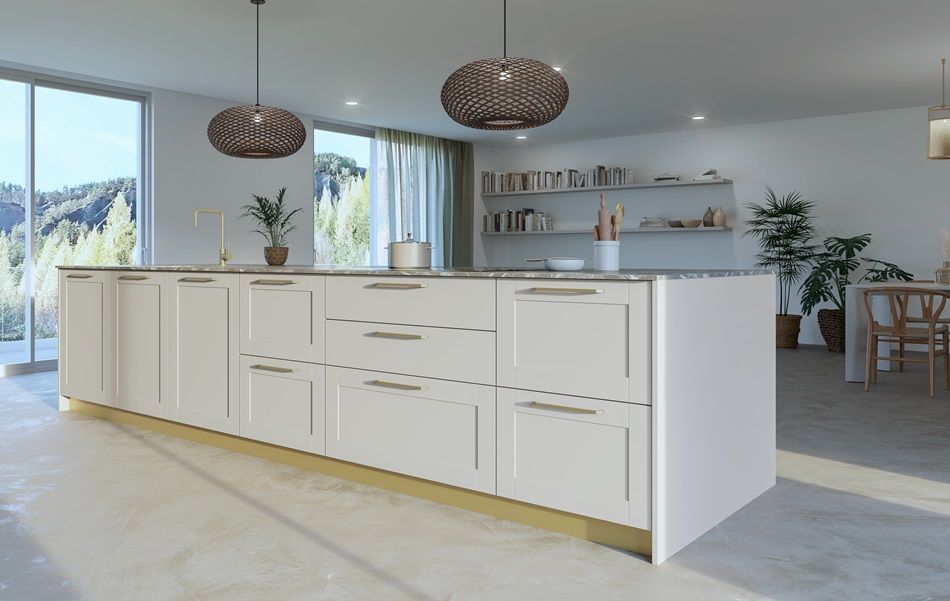
European vs Italian Cabinets: 6 Key Differences That Matter
Because the two categories overlap, the comparison is really about emphasis. Here is how European vs Italian cabinets differ in the areas that affect your kitchen day to day.
1. Origin and Labeling
“European-style” can describe cabinets made anywhere. “Italian” should mean manufactured in Italy. Always ask where the boxes and doors are actually produced, because “Italian design” can describe a look rather than a factory. A reputable dealer will name the manufacturer and show you documentation.
2. Construction Standards
Here the two are close. Both use frameless boxes, concealed hinges, and system drilling. Differences in quality come from panel density, edgebanding, joinery, and back-panel construction rather than from the country label. A well-made European-style cabinet from any origin can outperform a poorly made one from Italy, and the reverse is also true. If anyone tells you one side of the European vs Italian cabinets question is structurally superior by default, ask them to show you the inside of the box.
3. Design Language and Aesthetics
Generic European-style lines tend toward clean, functional minimalism, which suits many homes perfectly. Italian lines push further into composition, mixing materials, finishes, and proportions to create a signature look. If you want your kitchen to feel designed rather than simply fitted, this is where the Italian approach earns its reputation.
4. Finishes and Material Palette
This is the widest gap in the European vs Italian cabinets comparison. Many European-style lines offer a curated set of laminates and painted finishes. Italian manufacturers typically offer far broader catalogs, including polished lacquers, textured surfaces, real wood veneers, and combinations within a single kitchen. Natural wood is especially strong right now; our wooden cabinets page explains how veneer over a stable core keeps doors flat.
5. Hardware and Interior Organization
Both categories rely on European-engineered hinges, drawer runners, and lift systems from established hardware makers. The difference is usually in how the interior is planned. Italian kitchens often include integrated organizers, internal drawers behind doors, and lighting details designed as part of the line rather than added afterward. For homeowners drawn to clean fronts, handleless kitchen cabinets with gola channels or push-to-open systems are a natural fit for either style.
6. Customization, Lead Time, and Showroom Experience
Mass-market European-style cabinets are often stocked in standard sizes, which shortens delivery but limits fit. Italian kitchens are generally made to order, which means more design choices and a longer production and shipping window from Italy. The tradeoff is a kitchen built for your dimensions rather than adapted to catalog sizes. Seeing finishes in person matters more with Italian lines, because lacquers and textures rarely photograph accurately.
Quality, Durability, and Indoor Air Quality: What to Verify
Whichever direction you lean, the label matters less than the evidence behind it. In any honest European vs Italian cabinets comparison, three checks protect your investment regardless of origin: performance testing, formaldehyde compliance, and warranty terms.
Performance Testing for Cabinet Durability
In North America, the Kitchen Cabinet Manufacturers Association administers the ANSI/KCMA A161.1 performance standard. According to the KCMA certification FAQ, certified cabinets pass 14 third-party tests, including a 600-pound load test, and both framed and frameless cabinets are eligible. KCMA also notes that frameless units face added scrutiny on joint-loading tests, which is why box construction quality matters so much in European-style cabinetry.
Not every imported line carries this particular seal, so ask your dealer what performance testing a line has passed, which standard it was tested to, and what the warranty covers. Clear answers are a strong signal of a trustworthy supplier.
Formaldehyde Compliance for Composite Wood
Most cabinet boxes, including premium ones, use engineered panels such as particleboard, MDF, or plywood, which are glued with resins. The U.S. Environmental Protection Agency regulates formaldehyde emissions from these materials under TSCA Title VI. The EPA’s composite wood products rule requires covered panels and finished goods containing them, including imported products, to be certified and labeled TSCA Title VI compliant.
California went first. The California Air Resources Board’s composite wood products program requires these panels and finished goods sold in the state to meet strict emission standards and carry compliance labels, and EPA describes its national standards as set at identical levels to CARB’s Phase II limits. For Orange County homeowners, that means any cabinet sold here, European or Italian, should come with clear compliance documentation. Ask to see it.
Warranty Terms Worth Reading Closely
A warranty tells you how much confidence a manufacturer and dealer have in the product. Read what it actually covers before you sign. Some warranties cover hardware separately from the cabinet boxes and finishes, and terms for each can differ. Ask whether coverage includes door alignment, finish defects such as peeling or discoloration, and drawer runner performance, and whether it transfers if you sell the home. Ask who handles claims: the manufacturer overseas, or a local dealer who can send someone to your kitchen. For imported cabinetry, local support is often the detail that matters most.
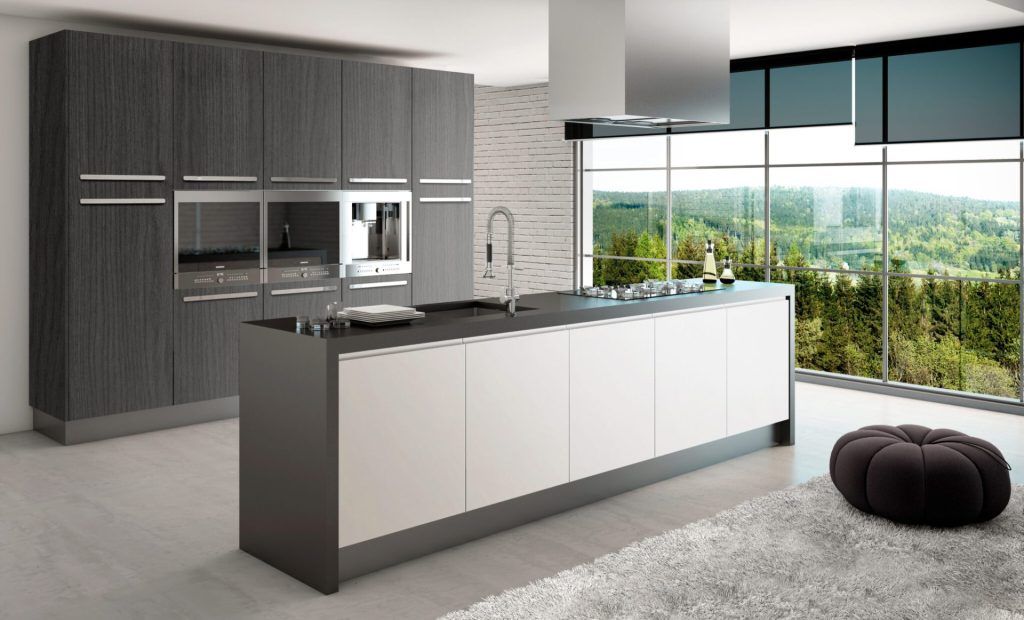
Which Is Right for Your Kitchen? Matching Cabinet Style to How You Live
The right answer depends on your priorities, your home’s architecture, and how much the kitchen’s design matters to you compared with pure function. Here is how we help clients decide between European vs Italian cabinets.
Choose European-Style Frameless Cabinets If…
- You want maximum storage and clean lines, and a functional minimalist look fits your goals
- Your project has a firm timeline and standard dimensions work for your space
- You are renovating a rental, secondary home, or space where design expression is not the priority
- You value the frameless method itself more than a specific design signature
Choose Italian Kitchen Cabinets If…
- You see the kitchen as the centerpiece of your home and want it to feel composed, not assembled
- You want finishes such as polished lacquer, textured matte, or sequence-matched veneer
- Your space has unusual dimensions, high ceilings, or an open plan that flows into living areas
- You want the kitchen, living area, and closets to share one design language
- You plan to stay in the home and want materials and design that age gracefully
Many clients land in between: Italian-made cabinetry with a restrained, functional design. That is one of the strengths of Italian manufacturing. It covers the full spectrum, from quiet minimalism to bold statement kitchens. Browse our modern kitchen collections to see that range.
Considerations for Southern California Homes
Orange County kitchens have their own demands. Large windows and abundant natural light make finish choice critical, since gloss amplifies light while matte diffuses it and hides fingerprints. Open-concept layouts mean the kitchen is visible from living spaces, which favors cabinetry that reads as furniture. Coastal homes benefit from well-sealed edges and quality edgebanding that resist humidity changes. These are details where Italian finishing standards tend to show their value, though any well-built line should address them. In coastal and inland Orange County alike, the European vs Italian cabinets decision often comes down to how a finish holds up to strong daylight over years, not months.
A Simple Way to Decide
If you are still torn, answer three questions honestly:
- How long will you stay? A short horizon favors efficient European-style lines; a long one rewards the materials and design depth of Italian cabinetry.
- How visible is the kitchen? In an open plan where the kitchen is part of the living room, design expression matters more.
- What will you touch every day? Finish, hardware feel, and drawer action shape your daily experience far more than the country label does.
Those answers usually settle the European vs Italian cabinets question faster than any spec sheet.
How to Compare Cabinet Quality in a Showroom
Photos flatter every cabinet. Whether you are weighing European vs Italian cabinets or comparing two Italian lines, use this checklist in person:
- Open and close every door and drawer. Soft-close action should feel smooth and consistent, with no rubbing or rebound.
- Pull a drawer to full extension. Look for full-extension runners and test stability with a firm push sideways.
- Inspect the edges. Edgebanding should be tight, flush, and continuous, with no visible glue lines.
- Look inside the box. Check panel thickness, back-panel construction, and how shelves are supported.
- View finishes under different light. Ask to see samples near a window and under warm interior lighting.
- Ask for documentation. Request the manufacturer’s name, country of production, formaldehyde compliance labels, and written warranty terms.
- Ask about the design process. A good dealer measures, designs in 3D, and gives you an itemized proposal before you commit.
Why Orange County Homeowners Choose Prestige Cabinet
At Prestige Cabinet, we work with cabinetry manufactured in Italy by established Italian kitchen makers, so the European vs Italian cabinets question is one our team answers every day. Our designers come from interior design, architecture, and millwork backgrounds, and they help clients weigh construction, finish, and layout against how each household actually cooks and lives.
What our clients can expect:
- Cabinetry manufactured in Italy, built on frameless European construction
- European-engineered soft-close hardware backed by a lifetime warranty
- Modern and classic collections, plus living area and closet systems that share the same design language
- Compliant materials, with cabinetry meeting CARB and EPA TSCA Title VI formaldehyde requirements
- A free 3D design consultation, so you can see your kitchen before you commit
The best way to understand the difference is to touch it. Visit us at our Santa Ana showroom (650 S Grand Ave, Santa Ana, CA 92705) or our Laguna Niguel showroom (23811 Aliso Creek Rd, Unit 160, Laguna Niguel, CA 92677), open drawers, compare finishes side by side, and talk through your space with a designer. You can also browse completed kitchens on our projects page or book your free design consultation.
Frequently Asked Questions About European vs Italian Cabinets
This is the most common point of confusion in the European vs Italian cabinets discussion. Italian cabinets are a subset of European cabinets. Nearly all Italian kitchen cabinets use European-style frameless construction, but not all European-style cabinets are made in Italy. “European” describes the construction method, while “Italian” describes the country of manufacture and the design culture behind it.
Not automatically. Quality depends on materials, edgebanding, hardware, and finishing, not the country label. Italian manufacturers are known for exceptional finishes and design, but you should still verify the specific line through in-person inspection, documented compliance, and clear warranty terms.
Italian cabinets are typically made to order and finished with labor-intensive processes such as multi-coat lacquer, then shipped from Italy. Broader material options and custom sizing add design and production time. Many homeowners see the value in a kitchen built for their exact space and expected to last for decades.
Yes, when they are well built. Frameless cabinets rely on box strength rather than a face frame, so panel quality and joinery are critical. KCMA notes that frameless cabinets are eligible for the same A161.1 certification as framed cabinets, though they face added scrutiny on joint-loading tests.
Ask the dealer to name the manufacturer and confirm where the boxes and doors are produced. Request product documentation and compliance labels. Be cautious with phrases like “Italian-inspired” or “Italian design,” which can describe a style rather than a place of manufacture.
The Bottom Line on European vs Italian Cabinets
European-style construction gives you the frameless foundation: more usable storage, full-overlay doors, and clean modern lines. Italian cabinetry gives you that same foundation plus a design culture known for proportion, finishes, and materials. Settling the European vs Italian cabinets question comes down to whether you want a well-built box or a well-built box designed as the centerpiece of your home.
Either way, judge the cabinet, not the label. Verify construction, ask for compliance documentation, and see finishes in person before you decide. When you are ready, visit Prestige Cabinet in Santa Ana or Laguna Niguel, or schedule a free 3D design consultation, and we will show you exactly what makes the difference.