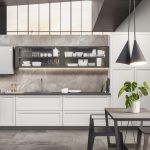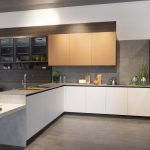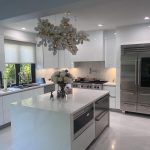
A wall cabinet with glass door fronts trades concealment for display. You gain a lighter-looking upper wall, eye-level space for pieces worth seeing, and faster access to what you store. You give up hidden storage, take on more cleaning, and need to plan more carefully for safety overhead. Glass-front upper cabinets suit entertainers, collectors, and open-concept homes where the kitchen is always on view. They frustrate busy households whose wall cabinets hold everyday, mismatched storage.
That is the short answer. If you are weighing a wall cabinet with glass door panels for a remodel, the longer answer depends on how you cook, what you own, and how much tidying you will honestly keep up. Below, the Prestige Cabinet design team walks through the real advantages and drawbacks, the households glass suits best, the ones that should think twice, and a Southern California detail most guides skip: what happens to glass and glassware mounted overhead when the ground starts moving.
What Counts as a Glass-Front Wall Cabinet?
A wall cabinet with glass door inserts is an upper cabinet, mounted on the wall rather than resting on the floor or countertop, in which some or all of the door panel is glazed instead of solid. That definition separates glass uppers from three things people often lump together:
- Glass base or tall cabinets, which sit below the counter or run floor to ceiling
- Freestanding hutches and china cabinets, which are furniture rather than built-in cabinetry
- Open shelving, which offers display without any door at all
Wall cabinets sit at eye level in most kitchens, which is exactly why the glass decision carries so much weight. Whatever is behind those doors becomes part of the room’s main sightline.
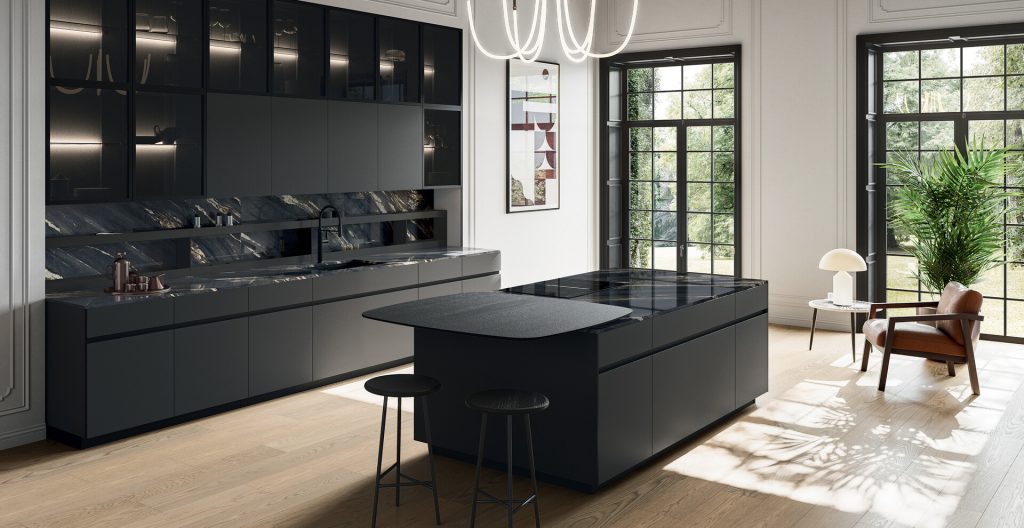
Framed Glass Doors for Classic and Transitional Kitchens
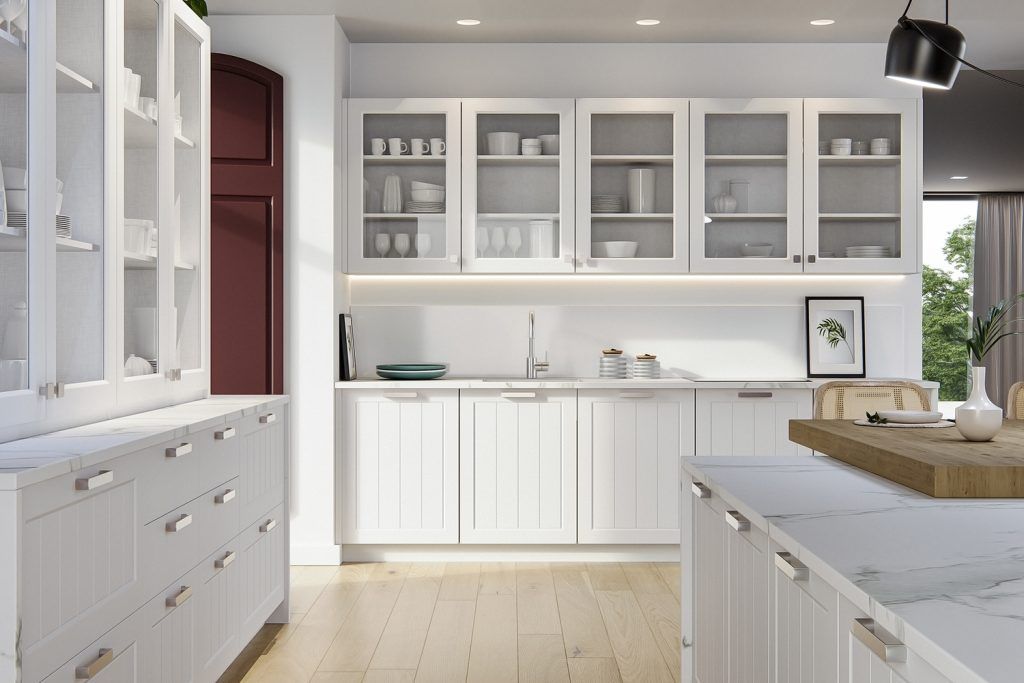
The traditional version uses a wood frame of rails and stiles around a glass panel, usually carrying the same profile as the solid doors beside it. Muntins, the slim bars that divide the glass into smaller panes, add period character. Construction method changes the result considerably; our guide to inset cabinets explains the overlay-versus-flush trade-off in depth.
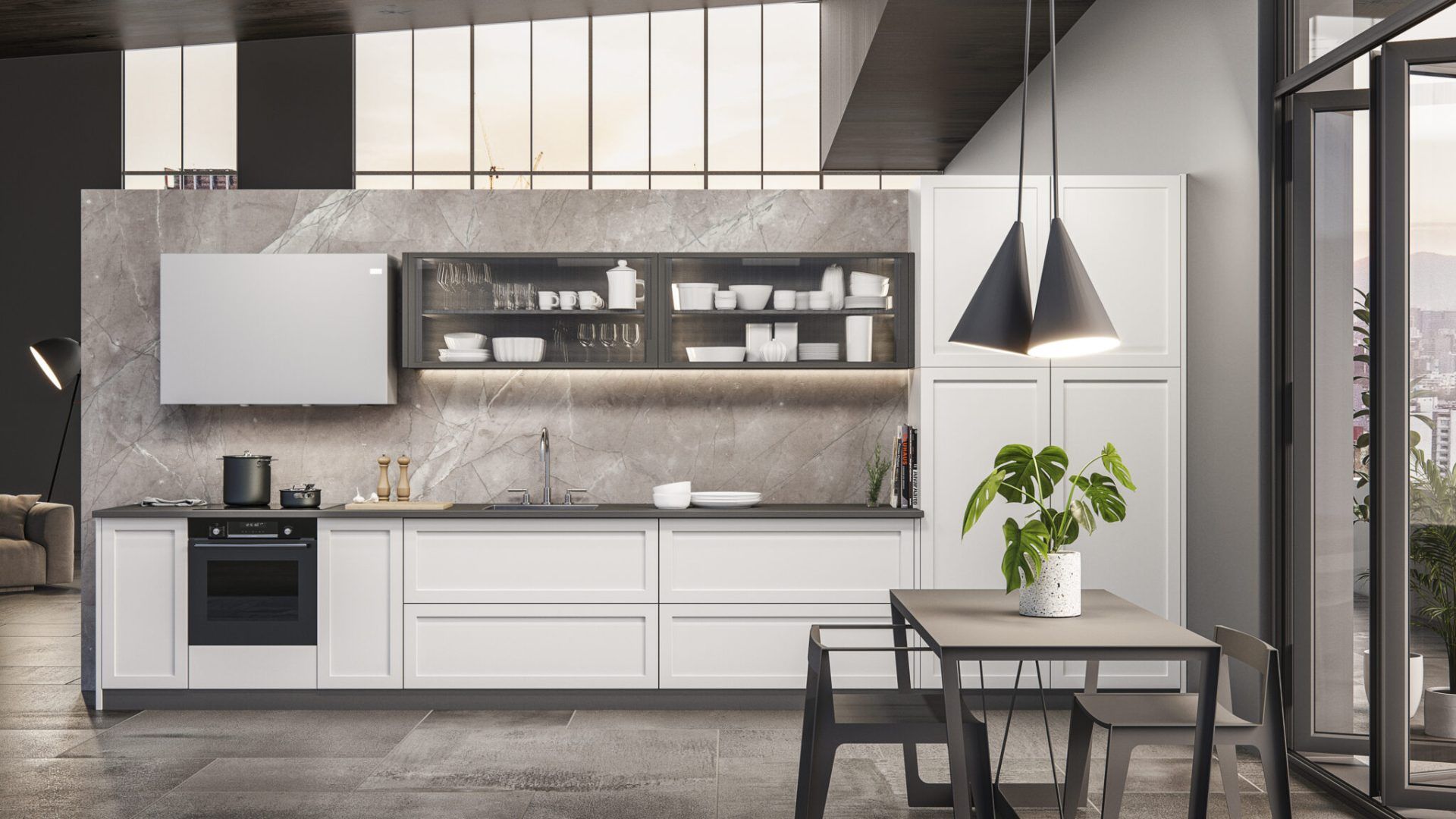
Slim-Profile Glass Doors for Modern Kitchens
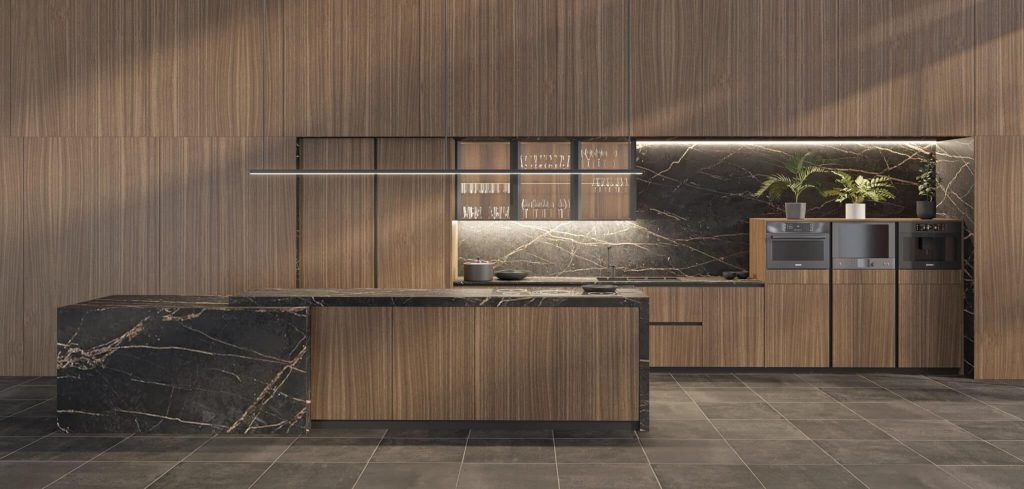
Contemporary kitchens tend to frame glass in a narrow metal or minimal wood profile, so the door reads as a pane rather than a picture frame. This version pairs naturally with flat-panel runs and handleless walls, and it is common in European kitchen design.
Glass Types at a Glance
The glass sets the character of the whole cabinet:
- Clear shows everything and rewards a curated collection
- Reeded or fluted blurs contents while letting light through
- Frosted or acid-etched shows shape and glow but no detail
- Seeded or antique suits traditional and Mediterranean homes
- Mirrored or leaded makes a decorative statement rather than a display
Our glass-front cabinet design guide covers each glass type, frame proportion, and interior finish in detail. This article stays focused on the bigger question: should you choose glass at all?
The Pros of Glass-Front Upper Cabinets
Glass earns its place when it solves a visual or practical problem. These are the advantages that last.
They Lighten a Heavy Upper Wall
A long run of solid uppers is the heaviest visual mass in most kitchens, and it sits right at eye level. Replacing even two doors with glass breaks that mass, adds depth, and gives the eye somewhere to rest. In a kitchen with a lot of cabinetry, this is often the single biggest reason to choose a wall cabinet with glass door fronts.
Eye-Level Display for Pieces Worth Seeing
Stemware, heirloom china, handmade ceramics, a set of matching serving bowls: these are things you bought partly for how they look. Behind solid doors they disappear. Behind glass, at the height where people naturally look, they become part of the design instead of something hidden from it.
You See What You Need Before You Open the Door
There is a practical upside too. With clear or lightly textured glass, you can spot the platter or the wine glasses from across the room. Guests helping in the kitchen find things without opening every door.
Glass Cabinet Doors Carry Light Through the Room
Glass reflects ambient light and, with interior lighting, becomes a soft light source of its own. Lit glass uppers can provide a gentle evening glow when you don’t want the overheads on. In a darker kitchen, that extra layer of light changes how the whole room feels.
Better Protection Than Open Shelving
Open shelves look relaxed, but they leave everything exposed to dust and cooking residue. Glass gives you a similar display effect while keeping contents behind a closed door. Pieces you use only a few times a year stay clean between uses.
A Focal Point in Modern or Classic Rooms
Glass is one of the few cabinet details that crosses styles comfortably. Framed and divided glass suits a traditional or transitional kitchen; a slim-profile pane suits a contemporary one. Either way, a symmetrical pair flanking a range hood, or a lit unit closing the end of a run, gives the room a deliberate focal point.
The Cons of Glass Door Wall Cabinets
Every advantage above has a matching cost. Most regrets with glass uppers trace back to one of these drawbacks being underestimated at the design stage.
Everything Inside Is Always on Show
This is the big one. Clear glass is a permanent commitment to keeping contents arranged. Mismatched mugs, half-empty cereal boxes, and stacked food containers look fine behind a solid door and chaotic behind glass. Most households overestimate how much curating they will want to do once the novelty wears off.
Two Surfaces to Clean Instead of One
Glass shows fingerprints, splashes, and grease film far more plainly than a painted or wood door. You clean the outside regularly and the inside whenever you reorganize. Uppers near the cooktop collect cooking residue fastest, which is why designers rarely place glass right beside the range.
Less Concealed Storage Where You Need It Most
Upper cabinets are prime real estate for everyday items: plates, glasses, spices, food storage. Every door you convert to glass becomes display storage rather than utility storage. In a kitchen already short on cabinets, that trade can push everyday clutter onto the countertop, which is the opposite of what you wanted.
More Decisions and a Higher Budget
Choosing a wall cabinet with glass door panels is never just a door swap. The interior becomes visible, so the box, shelves, and back panel need finishing to a display standard. Interior lighting adds wiring, switching, and coordination with your electrician. Each of these adds to the budget and the design timeline compared with solid doors.
Glass Overhead Adds Breakage Risk
Glass is durable, but it is still glass, and wall cabinets put it at head height in the busiest room in the house. Accidental impact is uncommon, yet the consequences are greater than with a wood door. Add earthquakes to the picture, as you must in Southern California, and what sits behind the glass matters as much as the glass itself. More on that below.
Too Much Glass Turns Busy
Glass works through contrast. A full wall of glass-front uppers loses the contrast that made the first two look special, multiplies the cleaning, and leaves nowhere to hide ordinary things. Our designers usually recommend fewer glass units than clients first ask for.
Who a Glass Display Wall Cabinet Suits Best
Glass is not a universal upgrade. It rewards specific habits, homes, and collections. If you recognize yourself in two or more of these profiles, a wall cabinet with glass door fronts is likely a strong fit.
Entertainers and Hosts
If you host often, you probably own more glassware and serveware than you use day to day. Glass uppers turn that collection into part of the room and make it easy for guests to help themselves. A lit glass cabinet near a bar or beverage station is especially effective, because glassware catches interior light better than almost anything else.
Collectors and Curators
Heirloom china, studio pottery, vintage barware, cookbooks with beautiful spines: collections like these deserve to be seen. Glass shows them off while keeping dust and cooking residue away, which open shelving cannot do.
Open-Concept Homes Where the Kitchen Is Always on View
When the kitchen faces the family room or dining area, the upper wall is effectively part of your living space. Glass softens that wall so it reads more like furniture and less like storage. In open-plan homes, that shift is often what makes the whole space feel finished.
Small Kitchens That Feel Boxed In, With a Caveat
In a compact kitchen, a solid upper wall can feel as if it is leaning in. One or two glass units add depth and make the room feel more open. The caveat: small kitchens also have the least storage to spare. Choose glass only where you can afford to give up concealed space, and consider obscured glass if those cabinets must still hold everyday items.
Homes With a Pantry, Bar, or Island to Absorb Everyday Storage
Glass works best when ordinary storage has somewhere else to go. A walk-in pantry, deep island drawers, or a butler’s pantry frees the upper cabinets for display. If your storage plan already handles the everyday, glass uppers carry very little practical cost.
Beyond the Kitchen: Living Rooms, Dining Rooms, and Closets
Glass-front wall units are just as useful outside the kitchen. In a living room or media wall, they display books, art objects, and collections above closed base storage; our living area designs show how this works. In a dining room, a wall cabinet with glass door panels can replace a bulky freestanding china hutch. In a dressing room, glass doors keep handbags, watches, and accessories visible but dust-free, an approach you will see across our closets and bedroom work.
Who Should Think Twice About Glass Upper Cabinets
Glass is the wrong call more often than showroom photography suggests. Consider solid or obscured doors if any of these sound familiar:
- Your uppers hold your everyday storage. If plates, food containers, and pantry overflow all live in wall cabinets, glass will put your daily routine on display.
- You want a low-maintenance kitchen. If wiping glass inside and out sounds like a chore you will skip, smudges will be the first thing you notice every morning.
- Your upper cabinets sit right beside the cooktop. Grease reaches nearby glass quickly and shows plainly.
- You prefer a calm, uninterrupted look. A seamless run of handleless kitchen cabinets or flat slab doors depends on visual continuity, and glass interrupts it by design.
- You are short on storage overall. Every glass door is a door you can no longer use to hide things.
None of these rule out glass entirely. They simply mean a wall cabinet with glass door fronts should be limited to one carefully chosen spot, or skipped in favor of another way to lighten the upper wall, such as a two-tone kitchen scheme that does the job with finish rather than glazing.
Glass Fronts, Open Shelving, or Solid Doors? Finding the Middle Ground
Most kitchens do not need one approach for the entire upper wall. Here is how the three options compare on what matters day to day:
- Solid doors hide everything, clean easily, and maximize everyday storage, but they can make a long upper wall feel heavy.
- Open shelving feels relaxed and airy, but contents collect dust and grease, and every item is fully exposed.
- Glass doors sit between the two: display like open shelving, protection like solid doors, and more cleaning than either.
The best kitchens usually blend all three.
Use Glass in One or Two Places, Not Across a Run
A single pair of glass units flanking a range hood, closing the end of a run, or sitting above a coffee or bar station changes the whole room. The remaining uppers stay solid and practical.
Put Glass on the Top Tier of Stacked Uppers
In homes with tall ceilings, stacked wall cabinets add a second, shallower tier above the main uppers. Glazing only that top tier creates display space for rarely used pieces where nobody reaches daily, while the lower tier stays solid and fully functional. It is one of the most effective ways to get the look of a wall cabinet with glass door fronts without sacrificing everyday storage.
Choose Obscured Glass for Ordinary Contents
If a cabinet must hold everyday items, reeded, fluted, or frosted glass gives you light and texture while blurring the detail. In our own showrooms, reeded and fluted glass is currently the most requested option for exactly this reason: most of the visual benefit, far less curating.
Plan Interiors and Lighting From the Start
A glass cabinet is only as good as what is behind it. Settle the interior finish, shelf material, and lighting before the cabinets are ordered, not after installation. For lighting, LEDs are the practical choice. According to the U.S. Department of Energy, LEDs use up to 90% less energy than traditional incandescent bulbs and last up to 25 times longer, and the technology is available for undercabinet and task lighting. The agency also recommends ENERGY STAR products and pairing lights with dimmers or timers, which suits cabinet lighting you may leave on as an evening glow.
Earthquake Safety for Glass Cabinet Doors in Southern California
Most design articles skip this part of the decision, but in Orange County it deserves real attention. Wall cabinets put breakable contents overhead, and glass doors put breakable material in front of them.
The Federal Emergency Management Agency (FEMA) warns that cabinet doors can swing open during an earthquake and spill their contents, and that objects falling from overhead cabinets can injure people below. In its homeowner guidance on installing latches on drawers and cabinet doors, FEMA recommends:
- Installing positive latches such as barrel bolts, safety hasps, or child-proof locks
- Not relying on magnetic or pinch-grip catches, especially on overhead cabinets holding heavy or breakable items
- Keeping heavy, breakable, or hazardous items out of overhead cabinets where possible
The California Governor’s Office of Emergency Services (Cal OES) gives similar advice in its guide to eliminating hazards in your home. It suggests securing kitchen cabinet doors with child-proof, hook-and-eye, or boat-style positive-catch latches, and holding glass and pottery objects in place with nondrying putty or microcrystalline wax.
What this means in practice for a wall cabinet with glass door fronts:
- Ask about latching early. Touch-latch and push-to-open systems are elegant, but ask how they will hold in a quake. Some homeowners add discreet positive latches to their glass display units only.
- Keep the heaviest pieces low. Display lighter glassware in the uppers and move heavy platters or stacked china to base drawers.
- Secure display pieces. Museum putty or wax under prized objects is invisible behind glass.
- Confirm the glass type. Ask whether door panels are tempered or laminated safety glass. Our glass-front cabinet page explains why that question matters even though cabinet doors generally fall outside federal architectural glazing rules.
- Insist on proper installation. Wall cabinets should be fastened securely into the wall framing by an experienced installer, never hung from drywall alone.
Is a Glass-Front Wall Cabinet Right for You? A Quick Checklist
Answer these honestly before you finalize your cabinet order:
- I own pieces I genuinely want on display at eye level
- My everyday storage has a home elsewhere, such as a pantry, drawers, or an island
- I am comfortable cleaning glass inside and out
- The glass units will not sit directly beside the cooktop
- I have decided how the interiors will be finished and lit
- I have a plan for latching doors and securing contents in an earthquake
If five or six statements are true, glass is a strong fit. Three or four, and you should limit glass to one or two units or choose obscured glass. Two or fewer, and solid doors, a short run of open shelving at a coffee station, or a two-tone finish will probably serve you better.
See Glass Cabinet Door Options in Person at Prestige Cabinet
Glass is a material you have to see. Photographs flatten texture, and the difference between reeded, fluted, and frosted glass only becomes obvious in person, against a real cabinet finish, under real light. That is why we show glass options physically in both of our Orange County showrooms:
- Santa Ana: 650 S Grand Ave, Santa Ana, CA 92705
- Laguna Niguel: 23811 Aliso Creek Rd, Unit 160, Laguna Niguel, CA 92677
Bring photos of your space and a list of what you want to display. Our designers will help you decide whether a wall cabinet with glass door fronts belongs in your plan, where it should go, and how many glass units your kitchen can carry. Book your free design consultation and see your Italian-made cabinetry in 3D before you commit.
Frequently Asked Questions About Glass Door Wall Cabinets
Are wall cabinets with glass doors still in style?
Yes, though the way they are used has shifted toward restraint. Designers now tend to favor one or two well-placed units over a full wall of clear glass, often with textured glass and integrated lighting. Because glass fronts belong to both classic and contemporary design traditions, a measured installation tends to age well rather than date the kitchen.
Do glass cabinet doors keep dust out better than open shelving?
Yes. A closed glass door keeps most dust and airborne cooking residue off the contents, while open shelves leave every item exposed. You will still clean the glass itself and wipe the interior occasionally, but display pieces stay far cleaner between uses.
Are glass door wall cabinets safe in an earthquake?
They can be, with the right planning. FEMA advises against relying on magnetic or pinch-grip catches on overhead cabinets that hold breakable items and recommends positive latches instead. Ask for safety glass, secure display pieces with museum putty or wax, keep heavy items in base cabinets, and make sure your wall cabinets are fastened into the wall framing.
Can I add glass doors to my existing wall cabinets?
Sometimes. A box built for solid doors usually has a utility-grade interior, visible shelf holes, and hinges chosen for a different door, all of which show once glass goes in. Turning an existing unit into a wall cabinet with glass door fronts often means refinishing the interior and replacing the doors with frames built for glazing. If you are already remodeling, specifying glass units from the start produces a cleaner result.
Do glass-front wall cabinets add value to a home?
We are not aware of reliable data that isolates the resale value of glass cabinet doors, so be cautious of anyone quoting a precise figure. What glass can do is help a kitchen photograph and show better, because it adds depth, light, and a focal point. Its real value lies in how well it fits the way you live.