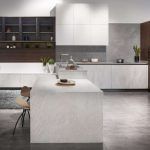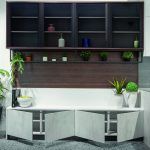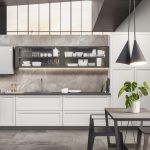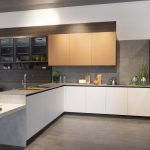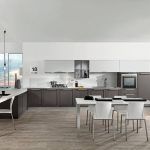
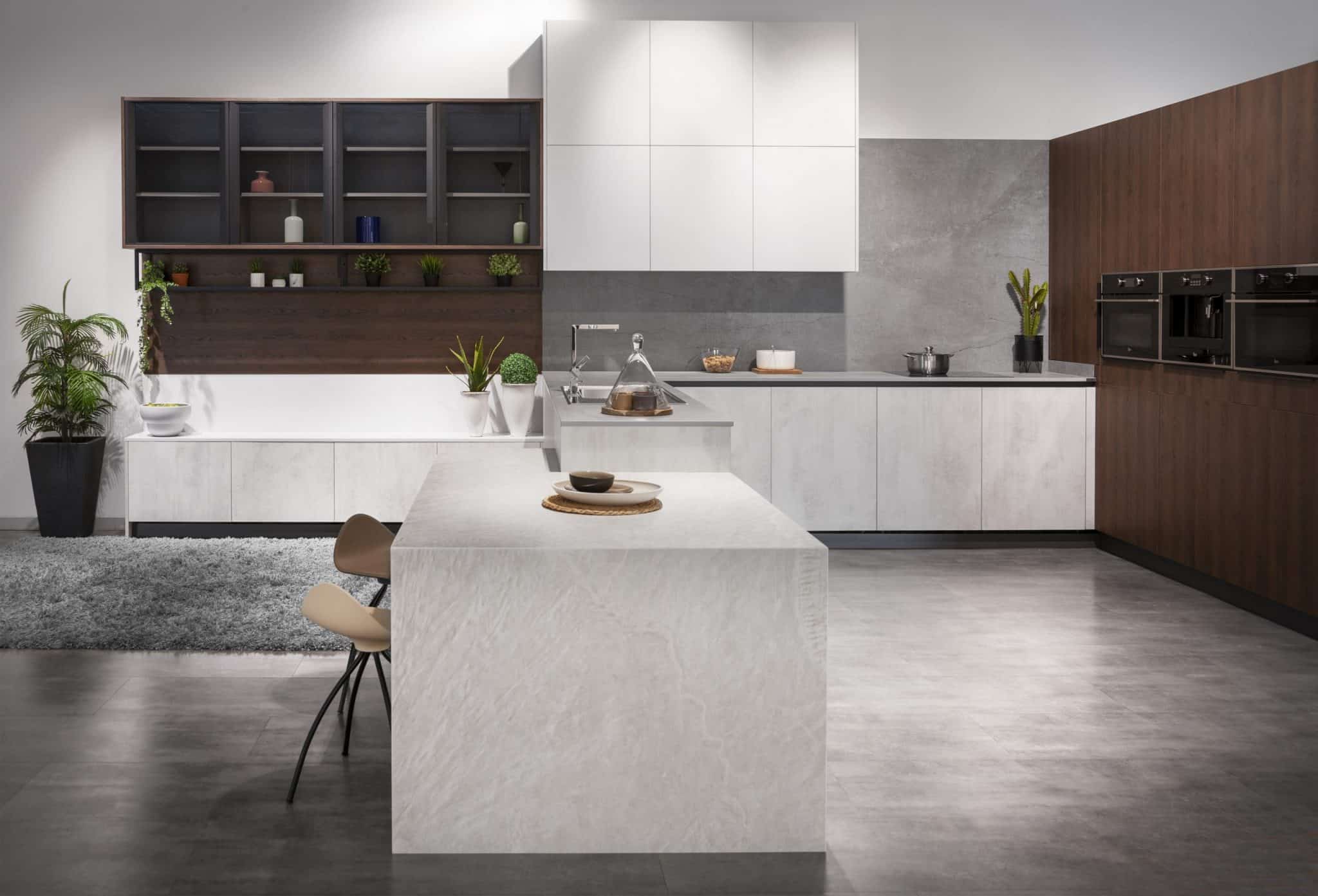
European style cabinets are frameless cabinets: the door attaches directly to the side of the cabinet box instead of to a front face frame. That one construction choice gives them their signature look, with full-overlay doors, slim reveals, and clean horizontal lines, plus wider openings and more usable storage inside every box. If you want a calm, contemporary kitchen that feels open and organized, European style cabinets are usually the first option designers show you.
But “modern-looking” is not a good enough reason to commit to the most visible and most-used surfaces in your home. Before you choose, it helps to understand how this cabinetry is built, where it came from, how it compares with traditional American framed cabinets, and which households it truly suits.
At Prestige Cabinet, we help Orange County homeowners make this decision every week in our Santa Ana and Laguna Niguel showrooms. This guide distills those conversations into a clear framework. You’ll learn:
- What defines European cabinetry, and what doesn’t
- How frameless construction differs from face-frame construction
- The real advantages and trade-offs, with no sales spin
- How to check quality, materials, and indoor air safety before you buy
- How to decide whether this style fits your home, your habits, and your long-term plans
What Defines European Style Cabinets?
The word “European” describes a construction method first and an aesthetic second. You can find European style cabinets in warm walnut, high-gloss lacquer, or textured matte laminate, yet they all share the same structural DNA.
Frameless Box Construction
A traditional American cabinet has a rectangular frame of solid wood strips glued to the front of the box. Doors and drawers hang on that frame. A frameless cabinet skips it entirely. The box sides are built from thicker, rigid panels that carry the structural load themselves, and the hinges mount directly to the interior side walls.
Without a frame narrowing the opening, nothing blocks your access to the interior. That is why you’ll often hear this style called full-access cabinetry.
Full-Overlay Doors and Tight Reveals
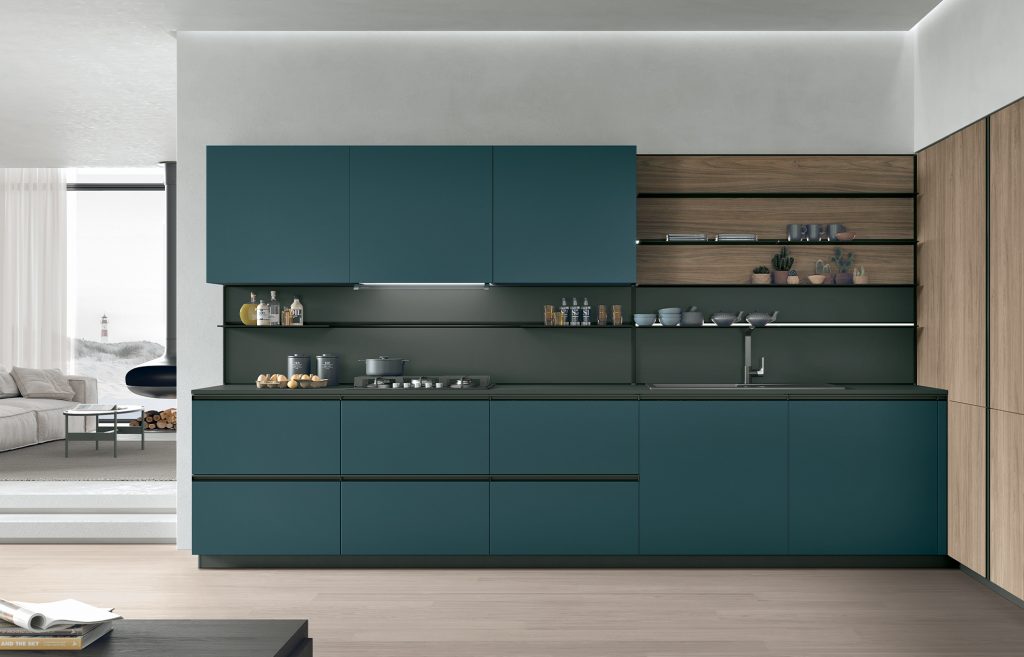
Because there is no frame to show, the doors cover almost the entire front of the box. The gaps between doors, known as reveals, are slim and consistent. The result is a continuous, almost seamless surface that reads as one architectural plane rather than a collection of separate boxes.
Concealed, Adjustable Hardware
Modern European cabinetry relies on concealed hinges, often called cup hinges, that are invisible when the door is closed. They adjust in several directions, so an installer can fine-tune alignment with a screwdriver. Soft-close mechanisms for doors and drawers are standard on most quality lines.
Modular Logic
European style cabinets are typically designed around a standardized system of pre-drilled holes and modular components. This precision approach makes hinges, shelves, and interior fittings easier to position consistently, and it is one reason frameless kitchens look so orderly.
Where European Cabinetry Came From
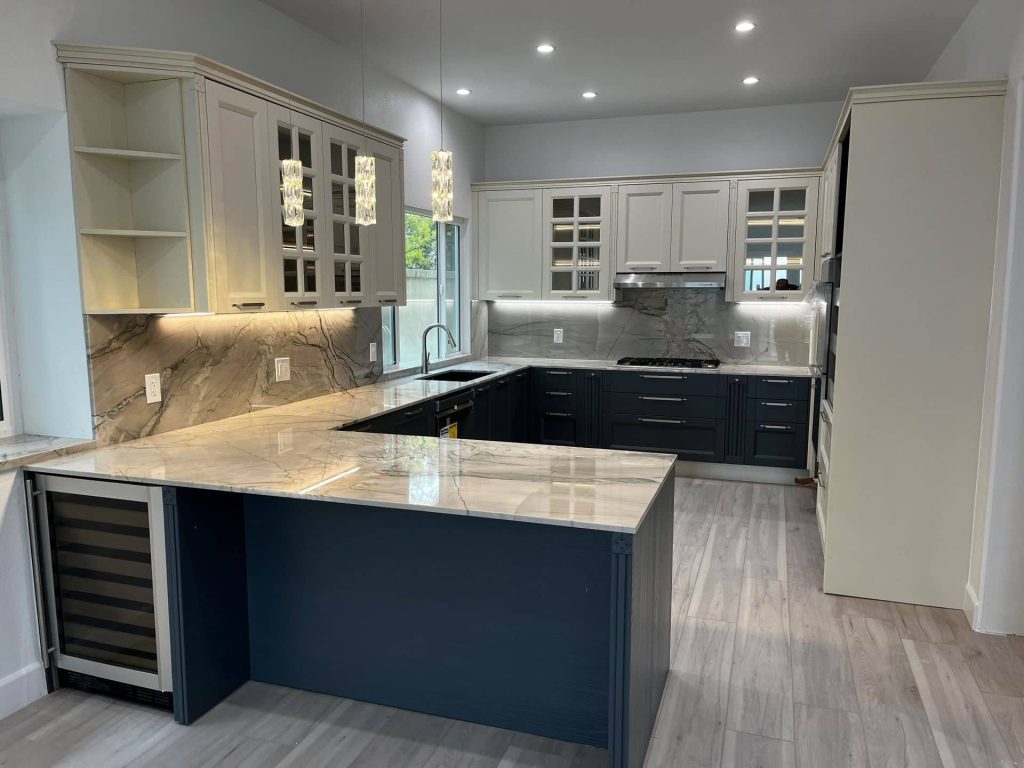
Frameless construction grew out of necessity. In the decades after World War II, European manufacturers, particularly in Germany and Italy, had to rebuild housing quickly with limited supplies of solid lumber. Engineered sheet materials and machine-driven production offered a practical answer.
Instead of hand-fitting face frames, factories began producing standardized boxes that could be drilled, assembled, and fitted with hardware in a repeatable way. Hinge makers developed concealed, adjustable hinges that suited this new approach. Over time, what started as an efficiency solution became a design language of its own: clean, minimal, and focused on function.
That heritage still matters today. Italian and German workshops remain closely associated with refined frameless kitchens, and the best European style cabinets still reflect that blend of engineering discipline and design restraint. It is also why Prestige Cabinet pairs Italian manufacturing with German-engineered hardware: the two traditions grew up together.
In North America, frameless cabinetry first gained traction in high-end urban condos and contemporary custom homes. Today it appears across every style category, from warm minimalist and Japandi interiors to transitional kitchens that blend modern lines with classic materials.
European Style Cabinets vs. American Framed Cabinets
Most homeowners are choosing between two systems: frameless European construction and traditional American face-frame construction. Neither is objectively “better.” Each solves different problems.
| Factor | Frameless (European) | Face-Frame (American) |
| Structure | Rigid box sides carry the load | Solid-wood front frame adds rigidity |
| Door style | Full overlay, slim reveals | Partial overlay, full overlay, or inset |
| Interior access | Unobstructed opening | Frame narrows the opening slightly |
| Drawer width | Wider drawers in the same box size | Drawers sit inside the frame |
| Visual effect | Seamless, architectural, contemporary | Defined, furniture-like, traditional |
| Installation tolerance | Demands square, level walls and precise layout | More forgiving of irregular walls |
Storage and Accessibility
The most practical difference is access. With no center stile or frame lip, you can slide a sheet pan, stockpot, or small appliance straight in and out. Drawers can run nearly the full interior width of the box, which matters most in base cabinets where you store heavy cookware.
Aesthetic Character
Framed cabinetry reads as furniture: you see the frame, the door, and the shadow lines between them. Frameless cabinetry reads as architecture: one smooth, quiet surface. If you love the detailing of a traditional kitchen, a face-frame or inset build may suit you better. If you want the cabinetry to recede and let materials and light lead, European style cabinets are the natural fit.
Precision Requirements
Because reveals are so tight, frameless kitchens leave little room for error. Walls, floors, and layouts must be measured carefully, and installers must be experienced with the system. This isn’t a drawback for well-planned projects, but it is a reason to choose your cabinet partner carefully.
Design Hallmarks of a Modern European Kitchen
Construction sets the stage, but door style, finish, and hardware define the personality of the room. Here are the elements you’ll see most often.
Door Profiles: From Slab to Shaker
The classic European door is a flat slab with no raised or recessed detail. It emphasizes clean geometry and lets the material speak. But frameless boxes pair just as well with slim shaker doors, which add a subtle frame profile for a transitional feel. A deeper look at slab versus shaker belongs in its own conversation; for now, know that the box and the door are separate decisions.
Finishes and Materials
European style cabinets come in a broad palette:
- Wood veneers such as walnut, oak, and ash, often with a horizontal or book-matched grain
- Lacquers in matte, satin, or high-gloss sheens
- Textured laminates and melamine that resist fingerprints and everyday wear
- Glass, metal, and stone-look fronts used as accent panels or upper doors
Matte and gloss each change how light moves through a room, and that choice deserves careful thought on its own.
Handleless and Integrated Pulls
Many contemporary kitchens skip visible hardware. Options include continuous channel pulls milled into the cabinet, finger grooves cut into the door edge, and push-to-open mechanisms. These details keep sightlines uninterrupted, which is the whole point of the style.
Horizontal Emphasis
Designers often stack wide drawers and align long runs of upper cabinets to create strong horizontal lines. This visually widens the room and gives the kitchen a calm, ordered rhythm.
Pros and Cons of Frameless Cabinetry
An honest decision guide needs both columns. Here is how frameless construction performs in real homes.
Advantages
- More usable storage. Removing the face frame opens up the interior, so the same footprint holds more.
- Easier access. Wide, unobstructed openings make it simpler to reach the back of base cabinets and pantry units.
- Clean, timeless lines. Minimal detailing ages gracefully and adapts to changing décor.
- Adjustable hardware. Concealed hinges can be realigned over the years, keeping doors straight.
- Design flexibility. The same box can wear slab, shaker, glass, or veneer fronts.
- Easy cleaning. Fewer ledges, grooves, and frame joints mean fewer places for dust and grease to collect.
Trade-Offs to Consider
- Less forgiving installation. Tight reveals expose uneven walls or careless leveling. Choose an experienced installer.
- Edge vulnerability. Door and panel edges are fully exposed, so quality edge-banding and finishes matter.
- Box quality is critical. With no frame adding stiffness, the panel material, joinery, and back construction must be strong.
- Not every aesthetic. If you want heavy ornamentation or visible furniture-style detailing, a framed or inset build may feel more authentic.
The pattern here is clear. Most drawbacks of European style cabinets are not inherent to the design; they show up when materials or installation are cut short. Well-built frameless cabinetry, properly installed, is a durable long-term investment.
Common Myths About Frameless Cabinets
A few persistent misconceptions keep homeowners from considering this style. Here is what our designers hear most, and what is actually true.
Myth: Frameless Means Flimsy
Strength in a frameless box comes from panel quality, joinery, and a properly secured back, not from a face frame. A well-engineered frameless cabinet is every bit as sturdy as a framed one. A poorly built cabinet of either type will disappoint.
Myth: It Only Works in Ultra-Modern Homes
The box is invisible once doors are installed. Choose a warm wood shaker door and classic pulls, and a frameless kitchen can feel transitional or even traditional.
Myth: Doors Will Sag Over Time
Concealed hinges are designed to be adjusted. If a door drifts after years of use, a few turns of a screwdriver bring it back into alignment, usually without calling anyone.
Myth: European Means Imported
“European” describes the construction method, not the country of origin. Frameless cabinetry is produced around the world. If origin matters to you, ask your supplier directly where the boxes, doors, and hardware are made.
Are European Style Cabinets Right for Your Home?
Style preferences matter, but the best decisions come from matching cabinetry to how you actually live. Use these questions as a filter.
How Do You Use Your Kitchen?
If you cook often, store bulky cookware, or host large gatherings, the extra access and drawer capacity of frameless construction pay off daily. Deep drawer stacks replace awkward lower shelves, so you stop kneeling to find a lid at the back of a cabinet.
What Is Your Home’s Architecture?
Contemporary, mid-century, coastal modern, and new-construction homes pair naturally with European cabinetry. In a Spanish Colonial or Craftsman home, you can still go frameless; just choose warmer woods and softer profiles so the kitchen relates to the rest of the house.
How Long Will You Stay?
If this is a long-term home, prioritize box construction, hardware quality, and finish durability over trends. Clean-lined European style cabinets tend to date more slowly than heavily ornamented styles, which helps if you plan to stay for years or eventually sell.
Who Lives With You?
Families with young children or aging parents often value easy-open drawers, soft-close hardware, and reachable storage. Full-access interiors and pull-out organizers make everyday tasks easier for everyone, at any height.
A Quick Self-Check
European cabinetry is likely a strong fit if you:
- Prefer clean surfaces and minimal visual clutter
- Want maximum storage from your existing footprint
- Value drawers over doors in base cabinets
- Are working with a designer and installer who know frameless systems
Materials, Indoor Air Quality, and Certifications
Because frameless boxes depend on their panels for strength, materials deserve more scrutiny than they do in framed construction.
Common Box Materials
Most European style cabinets use engineered panels such as furniture-grade plywood, medium-density fiberboard (MDF), or high-density particleboard, finished with laminate, veneer, or lacquer. Engineered panels resist the seasonal swelling and shrinking that can affect solid wood, which helps doors stay aligned. Quality depends on panel density, edge-banding, and joinery, not simply on whether a material is labeled “plywood” or “board.”
Formaldehyde Standards
Composite wood products have historically been bonded with resins that can release formaldehyde. Federal and state regulators now limit those emissions. Under the EPA’s Formaldehyde Emission Standards for Composite Wood Products rule, hardwood plywood, MDF, particleboard, and finished goods containing them must be labeled TSCA Title VI compliant. California set the template: the California Air Resources Board’s Composite Wood Products program specifically covers finished goods such as cabinets made with these panels.
When you shop, ask to see compliance labeling and documentation. A reputable supplier will provide it without hesitation.
Performance Certification
The Kitchen Cabinet Manufacturers Association administers the ANSI/KCMA A161.1 standard. According to KCMA’s certification program, certified designs have their structure, doors, drawers, and finish tested to simulate a lifetime of use. Certification is one useful signal among several; build quality you can see and feel in a showroom is another.
How to Judge Quality in a Showroom
Photos can’t tell you how a cabinet is built. When you visit a showroom, use your hands as much as your eyes. Here is the checklist our designers walk clients through.
- Open every type of door and drawer. Motion should be smooth, quiet, and consistent. Soft-close should catch gently every time.
- Pull a drawer all the way out. Full-extension slides let you reach the back. Press down on the open drawer front; it should feel stable, not wobbly.
- Look inside the box. Check that interior panels are cleanly finished, edges are sealed, and joints are tight.
- Run a finger along door edges. Edge-banding should be flush and continuous, with no peeling, gaps, or rough spots.
- Study the reveals. Gaps between doors should be even across a full run of cabinetry. Inconsistent spacing signals sloppy manufacturing or installation.
- Ask about hinge adjustment. A knowledgeable salesperson should be able to show you how doors are aligned and re-aligned.
- Request documentation. Ask about formaldehyde compliance, finish warranties, and hardware warranties in writing.
The brand on the box matters less than these details. European style cabinets reward close inspection, because the quality, or the lack of it, is right on the surface.
Planning a European Kitchen Layout
Great frameless kitchens are planned from the inside out. Before you pick a finish, map how you’ll actually use each zone. These planning habits make the biggest difference.
Start With Storage Zones
Group storage by task: prep, cooking, cleanup, and pantry. Put everyday dishes near the dishwasher, pots near the range, and spices within arm’s reach of the cooktop. When each drawer has a job, European style cabinets deliver on their promise of calm, clutter-free counters.
Favor Drawers Over Doors
In base cabinets, wide drawers usually outperform doors with shelves. You see everything at a glance from above, and nothing gets lost in the back. Reserve doors for sink bases and appliance garages.
Integrate Appliances Early
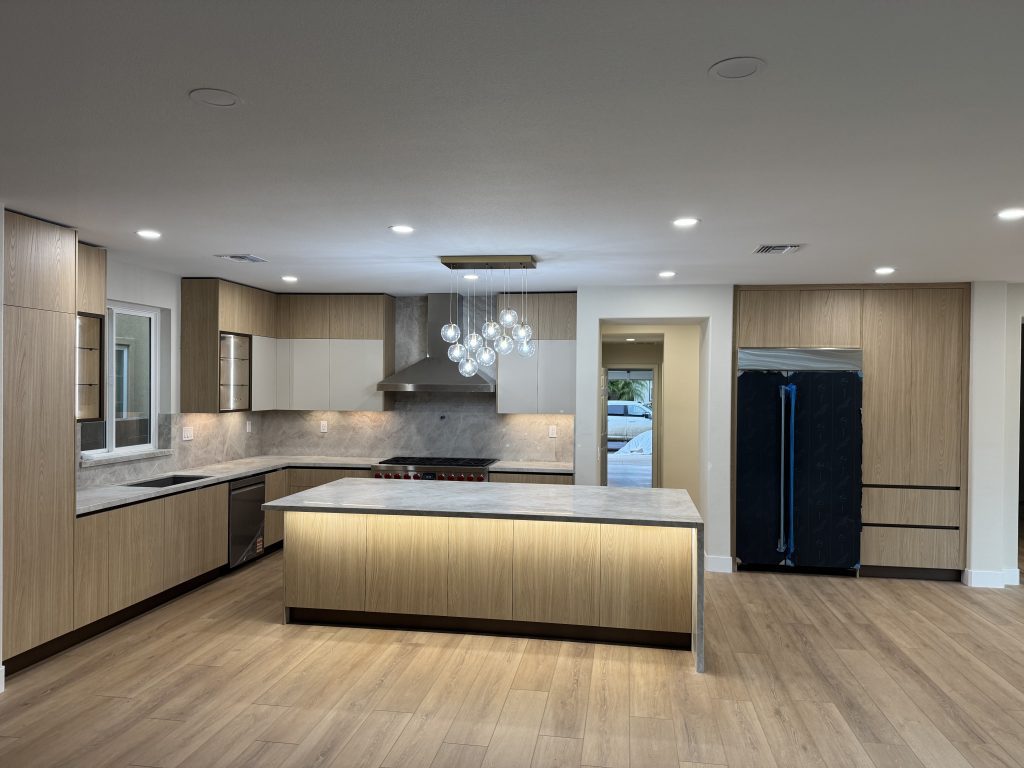
Panel-ready refrigerators and dishwashers disappear behind matching fronts, which preserves the seamless look. Choose appliances before finalizing cabinet layouts so openings, ventilation, and panels align precisely.
Plan Fillers and Finishing Panels
Because frameless doors sit flush with the box, designers add slim filler strips where cabinets meet walls or corners. Fillers give doors and drawers room to open without colliding with handles, trim, or adjacent fronts.
Layer the Lighting
Under-cabinet and in-drawer lighting highlight the clean lines of contemporary cabinetry and make deep storage easier to use at night.
Beyond the Kitchen: Frameless Cabinetry Throughout the Home
The same principles that make frameless construction work in kitchens apply to every room that needs organized storage.
- Bathrooms and vanities. Wall-hung frameless vanities create a lighter look and make floors easier to clean. Full-access drawers keep toiletries organized.
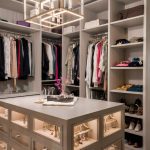
- Walk-in closets. Modular boxes, adjustable shelving, and integrated lighting turn closets into dressing rooms.
- Living rooms and media walls. Flush, handleless fronts hide electronics and keep entertainment walls visually calm.
- Home offices. Wide drawers and tall storage units hold files and equipment without visual clutter.
- Laundry and mudrooms. Durable laminate fronts stand up to daily wear and are easy to wipe down.
Using a consistent cabinetry language across rooms also gives your home a cohesive, intentional feel, especially in open-plan layouts where the kitchen flows into the living area.
See European Cabinetry in Person at Prestige Cabinet
Reading about construction details is useful. Touching them is decisive. At Prestige Cabinet, we design and supply luxury cabinetry built in Italy and fitted with German-engineered hardware, backed by a lifetime warranty. Our materials meet CARB and TSCA Title VI formaldehyde standards, and our designers will walk you through every option, from frameless modern kitchens to classic framed collections.
Visit either of our Orange County showrooms:
- Santa Ana: 650 S Grand Ave, Santa Ana, CA 92705
- Laguna Niguel: 23811 Aliso Creek Rd, Unit 160, Laguna Niguel, CA 92677
Bring your floor plan, a few inspiration photos, and a list of what frustrates you about your current storage. We’ll help you decide whether European style cabinets are the right fit, and we’ll show you a free 3D design so you can see your space before you commit.
Ready to start? Book your consultation at prestige-cabinet.com.
Frequently Asked Questions About European Style Cabinets
Are European style cabinets the same as frameless cabinets?
Yes, in practice the terms are used interchangeably. “European” refers to the frameless construction method that originated in postwar Europe, where doors mount directly to the cabinet box rather than to a face frame. The term doesn’t require the cabinets to be manufactured in Europe, although many premium lines, including ours, are.
Are frameless cabinets durable enough for a busy family kitchen?
They can be very durable when built well. Because the box carries all the structural load, look for dense panel materials, solid joinery, sealed edges, and quality hinges and slides. Third-party certification such as ANSI/KCMA A161.1, combined with a hands-on showroom inspection, is the best way to confirm durability.
Can European style cabinets work in a traditional home?
Absolutely. Pair frameless boxes with warm wood veneers, slim shaker doors, or classic hardware to bridge modern and traditional design. Many Orange County homeowners use this transitional approach to update a kitchen without clashing with the home’s architecture.
Can I mix frameless and framed cabinetry in one home?
Yes. Some homeowners choose frameless cabinetry for the kitchen and a framed or inset style for a library, butler’s pantry, or vanity where a furniture look is preferred. Work with your designer so finishes and proportions feel intentional across rooms.
Can European style cabinets be installed during a remodel?
Yes, and they are a popular remodel choice because they maximize storage within an existing footprint. The key is precise measuring and experienced installation, since walls in older homes are rarely perfectly square. A professional site measurement before ordering prevents surprises.