If you have spent any time on Pinterest lately, you have seen the headlines: the all-white kitchen is dead. Wood is back. Color is back. And somewhere underneath all that noise sits a homeowner about to spend real money on a renovation, quietly wondering whether white kitchen cabinets are about to make their brand-new kitchen look dated in three years.
That is a fair question, and it deserves better than a trend headline.
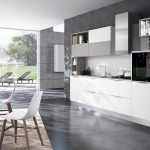
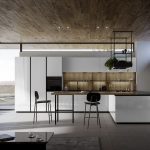
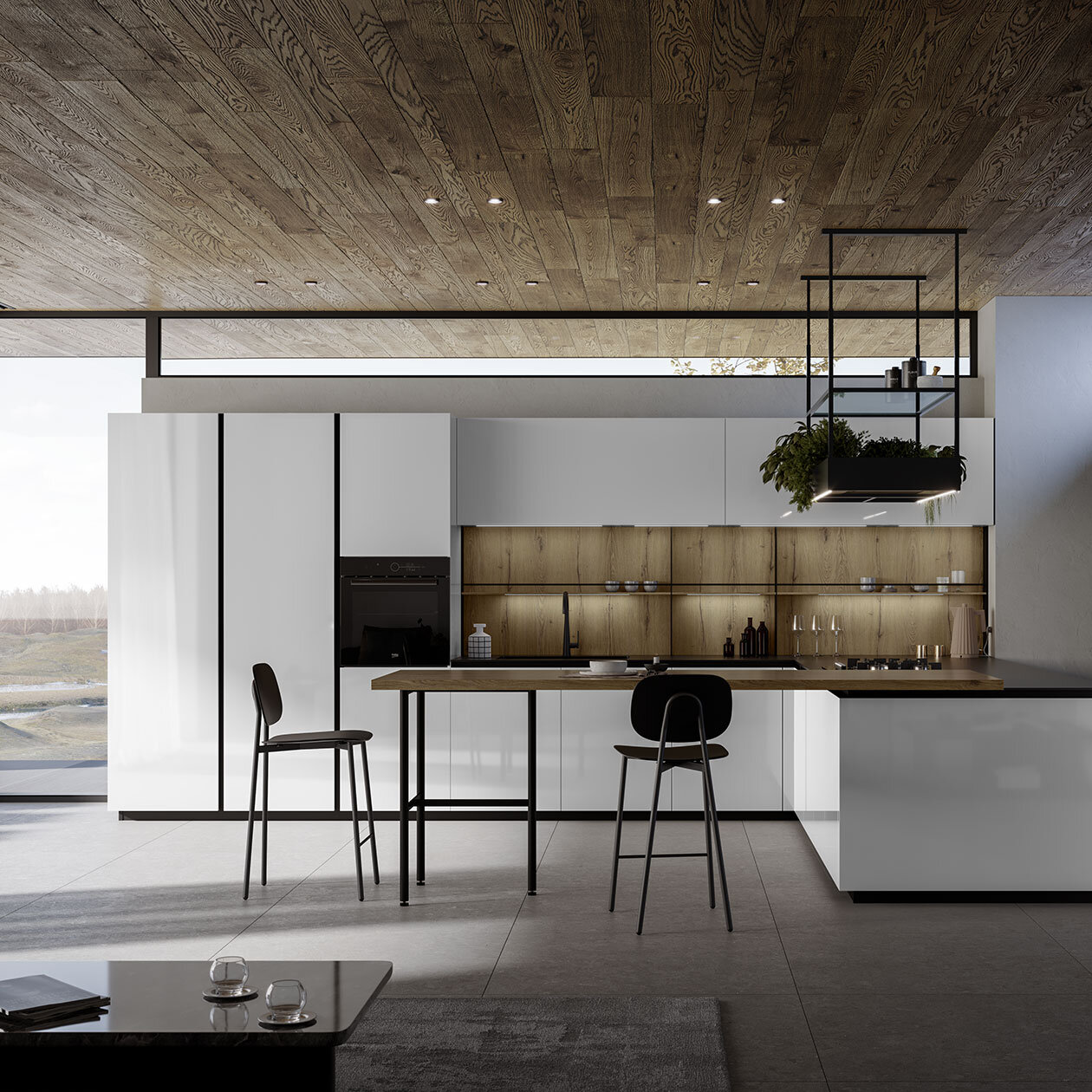
Here is the honest version: white kitchen cabinets are still very much in style, but the way designers use them has changed significantly. The stark, cool-toned, all-white kitchen that dominated the 2010s is genuinely fading. Off white kitchen cabinets paired with natural wood, stone, and texture are not fading at all – they are arguably the most requested look in luxury kitchen design right now.
At Prestige Cabinet, we design custom Italian-made cabinetry for homeowners across Orange County, and white kitchen cabinets remain one of our most-specified finishes. But almost nobody is asking for the same white they asked for a decade ago.
This guide covers what the current data says, why the backlash happened, and the white kitchen cabinets ideas that actually look current – plus which pairings to avoid.
The Short Answer: White Kitchen Cabinets Are Still in Style – They Have Just Grown Up
White kitchen cabinets are not over. They have been repositioned.
For most of the last decade, white was the safe default – the finish you chose when you did not want to choose. That is no longer true. Today, white kitchen cabinets are a deliberate design decision that works beautifully when paired thoughtfully and finished properly, and falls flat when treated as a shortcut.
The trend that is genuinely ending is the monochrome all-white kitchen: white cabinets, white quartz, white subway tile, chrome hardware, no contrast, no warmth, no texture. That specific formula has been so thoroughly overused that it now reads as dated.
What replaced it is warmer, quieter, and considerably more interesting – and white kitchen cabinets are still at the center of it.

What the 2026 Data Actually Says About White Kitchen Cabinets
Trend conversations get emotional. Numbers help.
Wood Overtook White – By a Single Percentage Point
The headline that launched a thousand “white is over” articles came from the 2026 U.S. Houzz Kitchen Trends Study, a survey of 1,780 renovating homeowners. Wood cabinetry claimed the top spot for cabinet color at 29%, a six-point jump year over year, pushing white into second place at 28% after a five-point decline.
Read that again, because the margin matters. Wood beat white kitchen cabinets by one percentage point. That is not a collapse. That is a photo finish after white spent nearly a decade running unopposed.
Put differently: more than one in four homeowners renovating right now is still choosing white kitchen cabinets. If the trend were truly over, that number would look nothing like 28%.
What Designers Are Specifying
Industry professionals confirm the same directional shift. The NKBA 2026 Kitchen Trends Report, drawn from 634 kitchen and bath professionals across North America, found 59% identified wood grain as growing in popularity, with white oak the most-specified species at 51%.
The same report found 96% of respondents named neutrals as the dominant color direction, with greens at 86% and blues at 78%.
That first statistic is the one most trend articles skip. Neutrals are not losing. Warm neutrals – creams, off-whites, greiges, soft wood tones – are the foundation of nearly every kitchen being designed today. White kitchen cabinets sit comfortably inside that category as long as the undertone is right.
The Statistic That Reframes Everything
Here is the detail that settles the debate. Houzz found roughly a quarter of homeowners now choose contrasting upper and lower cabinets – the “tuxedo kitchen.” Among those two-tone kitchens, white remains the dominant choice for upper cabinets at 40%, followed by off-white at 19%, while wood finishes lead on the lower cabinets at 37%.
So when a homeowner mixes finishes, they overwhelmingly reach for white on top.
White kitchen cabinets did not lose. They changed jobs. Instead of carrying the entire room, white kitchen cabinets now provide the light, the visual breathing room, and the backdrop that lets wood, stone, and metal do the talking.
Why White Kitchen Cabinets Became the Default
Understanding the rise explains the correction.
The All-White Kitchen Boom
The all-white kitchen took over for reasons that were genuinely practical:
- Light. White kitchen cabinets reflect available light, which makes smaller and darker rooms feel considerably more open.
- Resale safety. Agents spent years telling sellers that neutral kitchens photograph well and appeal broadly.
- Flexibility. White kitchen cabinets pair with virtually any countertop, backsplash, flooring, or hardware finish.
- Availability. Painted white was the least expensive finish most manufacturers offered, so it saturated the market from the bottom up.
None of those advantages have expired. They are still why homeowners choose white kitchen cabinets today.
Where the Backlash Came From
The problem was never white. The problem was sameness.
When half the kitchens in a neighborhood share the same wide-rail shaker doors, the same white quartz with grey veining, and the same subway tile, the look stops feeling like a choice and starts feeling like a default setting. Add the era markers – cool blue-grey undertones, brushed nickel hardware, grey wood-look flooring – and you get a kitchen instantly timestamped to around 2016.
There is a livability argument too. Kitchens are where people gather, and homeowners have moved decisively toward interiors that feel warm and grounded rather than clinical. So the market corrected. It did not abandon white kitchen cabinets – it abandoned cold white used without contrast.

The All-White Kitchen Is Over. White Cabinetry Is Not.
This distinction is the most useful thing to take from this article.
Off White Kitchen Cabinets Are Replacing Bright White
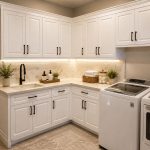
The clearest shift is undertone. Bright, blue-leaning whites – the ones that look almost clinical under LED lighting – have given way to whites carrying a hint of warmth: soft creams, alabaster, greige-leaning whites, and gentle ivories.
Off white kitchen cabinets do something cool whites cannot: they flatter natural materials. Against white oak, walnut, unlacquered brass, or veined marble, an off-white looks harmonious. A cool white makes those same materials look slightly yellow or muddy by comparison.
If you get only one decision right when specifying white kitchen cabinets, make it this one.
Antique White Kitchen Cabinets: Where They Work and Where They Do Not
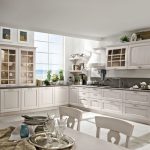
Antique white kitchen cabinets – creamier whites, often with a subtle glaze or distressed edge – occupy a narrower lane. In a traditional or Mediterranean-style home, particularly with inset door construction and natural stone, antique white kitchen cabinets read as warm and collected rather than dated.
Where they struggle is in transitional and modern homes, where heavy glazing and distressing on a shaker door is one of the most recognizable markers of mid-2000s design. The modern approach is to keep the creamy undertone and drop the artificial aging. That gets you the warmth without the timestamp.
White Oak Cabinets and Kitchen Two-Tone Design
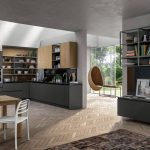
If one material defines this design cycle, it is white oak. Rift-sawn white oak cabinets in a kitchen deliver long, straight grain and a pale, ashy tone that sits beautifully beside white kitchen cabinets – which is precisely why the pairing has exploded.
The most-requested configurations:
- White uppers, white oak lowers. Light above, grounded below – the dominant two-tone formula.
- White kitchen cabinets with a white oak island. The island becomes the focal point without darkening the room.
- White kitchen cabinets with white oak open shelving or a glass-front accent unit. Small doses of warmth inside a predominantly white scheme.
- White oak cabinets in the kitchen pantry or coffee station. Warmth in the zones you use daily.
Two-tone design solves the sameness problem without giving up the light and flexibility that made white kitchen cabinets appealing in the first place.
Texture Is Doing the Work Color Used To
White kitchen cabinets are no longer flat. Designers add dimension through the cabinetry itself:
- Reeded or fluted panels on islands and tall units
- Slim-rail shaker profiles instead of wide, chunky frames
- Handleless flat-slab doors with integrated channel pulls
- Matte and satin finishes replacing high-gloss lacquer
- Micro-textured surfaces that catch light differently through the day
A textured white kitchen has depth even in a single color. That is why white kitchen cabinets in a well-designed 2026 kitchen look nothing like those from 2016, even when the color name is nearly identical.
Kitchen Colors With White Cabinets: What Works Now
Choosing kitchen colors with white cabinets is where most renovations are won or lost. Here is where each pairing stands.
White Kitchen Cabinets With Black Accents
White kitchen cabinets with black elements remain one of the sharpest, most enduring combinations in kitchen design – but the execution has shifted. The current approach is restraint: matte black hardware, a black steel window frame, a black island base, or a soapstone-look countertop, set against a warm white perimeter.
What is fading is high-contrast, glossy black-and-white checkerboard treatments. Used as an accent rather than an equal partner, white kitchen cabinets with black detailing look crisp and expensive.
Gray and White Kitchen Cabinets: The Combination to Retire
If there is one pairing to reconsider, it is this one. Gray and white kitchen cabinets defined the 2014–2019 era so completely that the combination now functions as a date stamp – especially cool-toned grays with blue undertones alongside bright white.
Houzz data supports this: green has now overtaken gray as the leading non-neutral cabinet color, at 6% versus 5%. Gray is not unusable, but it has to be warm – think mushroom, greige, or a soft putty rather than storm cloud. If you love the contrast that gray and white kitchen cabinets provide, warm taupe or a deep olive will deliver the same balance while reading as current.
Greens, Blues, and Earth Tones
The strongest kitchen colors with white cabinets right now are drawn from nature: sage and forest green, muted navy and slate blue, warm khaki, and espresso brown. Applied beside white kitchen cabinets on an island or lower run, these ground a room that would otherwise float. Applied to a single pantry wall, they add personality with minimal commitment.
White Kitchen Cabinets With Granite Countertops
Granite went quiet for a decade while quartz dominated, but natural stone is returning as homeowners move toward organic materials. White kitchen cabinets with granite countertops work exceptionally well – with one condition.
Choose the granite for its movement, not its busyness. Large-format slabs with soft, sweeping veining or a honed leathered finish look sophisticated against white cabinetry. What ages poorly is speckled, high-contrast granite in gold or orange tones, which fights white kitchen cabinets rather than complementing them. If you are pairing white kitchen cabinets with granite countertops, view the actual slab in person – never a sample chip.
7 White Kitchen Cabinets Ideas That Look Current
If you want cabinetry that ages well, these are the levers that matter most.
- Test the undertone of your white kitchen cabinets in your own light. A white that looks perfect in a showroom can turn grey or yellow in a north-facing Orange County kitchen. With hundreds of finishes available, there is no reason to settle.
- Pair white with at least one natural material. White oak, walnut, limewash plaster, or veined stone gives the eye somewhere warm to land.
- Rethink the door profile. Wide-rail shaker is the clearest marker of the last decade. Slim-rail shaker, flat slab, and inset profiles all read as contemporary.
- Change the metals. Unlacquered brass, aged bronze, and matte black instantly move white kitchen cabinets into a different decade.
- Extend the backsplash. Running slab material to the ceiling behind the range gives the room its focal point.
- Layer the lighting. Cold overhead light makes white kitchen cabinets look clinical. Warm under-cabinet and interior lighting keeps the room soft.
- Invest in the finish, not just the color. This is where most white kitchens quietly fail – and it deserves its own section.

Kitchen Ideas With White Cabinets, Matched to Your Space
Not every kitchen should use white the same way. Three common scenarios:
- Small or galley kitchens. Go nearly full white for maximum reflectivity, then add interest through texture and hardware rather than contrast. Reeded panels and a slab backsplash do more here than a dark island would.
- Dark or north-facing kitchens. Off white kitchen cabinets with a warm undertone prevent the grey cast that bright white picks up in low light. Warm-temperature lighting matters more here than anywhere else.
- Large open-plan kitchens. These carry two-tone beautifully. White kitchen cabinets on the perimeter keep the space connected to adjacent living areas, while a wood or colored island defines the kitchen zone.
The best kitchen ideas with white cabinets start from your light and layout, not from a saved photo of someone else’s home.
The Case Against White Kitchen Cabinets, Honestly Assessed
We would not be much of an authority if we argued only one side.
Maintenance is genuinely higher. White kitchen cabinets show splatter and fingerprints more readily than mid-tone wood, particularly around the range and trash pullout.
Low-quality white finishes yellow. Inexpensive painted and thermofoil finishes can amber over time, especially near heat and in strong sun. A five-year-old kitchen with yellowed fronts looks dated regardless of the original design.
White can flatten a room without contrast. In a dark kitchen with no contrasting materials, white reads as washed out rather than bright.
It is no longer automatically the resale-safe choice. “Neutral” now includes warm woods and earth tones, so white kitchen cabinets no longer hold a monopoly on broad appeal.
If you cook heavily, dislike upkeep, and have limited natural light, be honest with yourself – a warm wood scheme may serve you better.
Painting Kitchen Cabinets White vs. Replacing Them
Homeowners often ask whether painting kitchen cabinets white is a reasonable shortcut. Sometimes it is. If your existing boxes are solid, your layout works, and your door profile is not badly dated, refinishing can buy several good years for a fraction of the cost.
But painting existing kitchen cabinets white does not fix a wide-rail door profile, poor interior storage, or failing hinges – and site-applied paint rarely matches the durability of a factory-cured finish. If your cabinetry is more than fifteen years old or the layout genuinely frustrates you, refinishing tends to postpone the problem rather than solve it.
Why Finish Quality Decides Whether White Cabinets Age Well
This is the part trend articles never cover, and it matters more than any color decision you will make.
Two white kitchens built the same year can look completely different at year seven. The difference is almost never the shade. It is the substrate, the finishing process, and the number of coats.
Premium white kitchen cabinets are built on stable, engineered cores, then finished with multiple layers of UV-cured or catalyzed lacquer applied and sanded in a controlled environment. That process produces a surface that resists yellowing, holds its sheen, cleans easily, and does not telegraph seams. It is also why Italian-made cabinetry has a reputation for aging well – the finishing standards are simply higher.
Finish quality carries a health dimension too. The U.S. Environmental Protection Agency notes that concentrations of volatile organic compounds are consistently higher indoors than outdoors, with paints and varnishes among the common contributors. For a room where your family cooks daily, ask any supplier directly what standards their finishes meet.
When homeowners worry that white kitchen cabinets will look tired in a few years, this is almost always what they are actually worried about.
White Kitchen Cabinets and Resale Value in Orange County
Orange County buyers are design-literate. They tour a lot of homes and recognize builder-grade work quickly.
That cuts both ways. A generic white kitchen with wide shaker doors and stock hardware signals “we did the minimum.” Warm white kitchen cabinets with a contrasting island, integrated appliances, and a full-height stone backsplash signal genuine investment – and photograph beautifully in listings, which still matters enormously.
The National Association of REALTORS® highlighted the same shift toward warmer palettes in its coverage of the 2026 Houzz findings, noting that updated kitchens help listings feel current to today’s buyers.
Frequently Asked Questions
No. White kitchen cabinets remain one of the two most popular choices in the United States, selected by 28% of renovating homeowners in the 2026 Houzz Kitchen Trends Study – one point behind wood. What is fading is the stark, cool-toned, all-white kitchen with no contrast.
Natural wood tones, particularly white oak, took the top spot, and green overtook gray as the leading non-neutral cabinet color. In practice, most of these finishes are used alongside white kitchen cabinets in two-tone schemes rather than replacing them – white still leads on upper cabinets at 40%.
Natural wood tones, warm metals, and stone with visible movement are the most reliable. Sage green, forest green, muted navy, and warm taupe all work well on an island or lower cabinets. The pairing to avoid is cool-toned gray and white kitchen cabinets, which reads as the clearest marker of the previous design cycle.
Yes, provided you choose the slab carefully. Soft, sweeping veining and honed or leathered finishes look sophisticated. Busy, speckled granite in gold or orange tones fights white cabinetry and dates quickly.
Low-quality painted and thermofoil finishes can yellow, especially near heat sources or in direct sunlight. Premium cabinetry finished with multiple layers of catalyzed or UV-cured lacquer on a stable core resists yellowing well. Ask about the finishing process and warranty coverage before you buy – not just the color name.
The Verdict
White kitchen cabinets are not over. The all-white kitchen is.
The homeowners who will regret their choice in five years are the ones who picked white as a default, in a cool undertone, in a stock finish, with no contrast anywhere in the room. The ones who will still love their kitchen in fifteen years chose a warm or off white deliberately, paired it with something natural, and invested in a finish built to last.
That is a craftsmanship question far more than a trend question.
At Prestige Cabinet, we design custom Italian-made cabinetry for Orange County homes across our modern and classic collections, with hundreds of finishes – including a full range of warm whites, off-whites, and creams – and lifetime warranty coverage. If you want to see how different whites read in person before you commit, that is exactly what our showroom is for.
Book your free design consultation today.